Notes from inside the work
Writing on SEO, AEO, GEO, paid media, lifecycle, subscriptions, user journey, and conversion optimization, from someone who builds these systems.
Everything here comes out of work I am actually doing: a measurement result that contradicted the dashboard, a structural fix that changed how an engine read a site, a retention problem that turned out to be a payments problem. If a post makes a claim about what worked, it will also say how that was established.
The four lanes, SEO/AEO/GEO, paid media, lifecycle, and user journey, are one system, so the categories below overlap on purpose. A post about why a funnel leaks is often really a post about which channel sent unqualified traffic into it.
Browse by topic
Latest
Creators are a channel now. Measure them like one.
US brands will spend $37B on creators in 2025, and the IAB says budgets grow on directional confidence, not proof. Measure them like any channel.
When the ruler moves, your dashboard calls it performance
Shopify, Search Console, Meta and Google all changed how they count in the last year. None of it was performance. Here is the log every team should keep.
You cannot prove your ads work, because no one will let you turn them off
Incrementality goes unmeasured not because the math is hard but because no one will approve pausing spend. Here is how to get the yes.
Shoppers don't need free shipping. They need a date they can trust.
52% of retailers think shipping cost decides the sale. Shoppers rank it third. The factor they rate highest is an accurate delivery date at checkout.
Getting cited was step one. Can an AI agent actually buy from you?
Google and Shopify opened checkout to AI agents in September. Being cited is no longer the finish line. Here is what an agent has to read to buy from you.
Run a geo-holdout pilot before you sign a measurement vendor
You can pilot a geo-holdout yourself for a fraction of a measurement contract. One test tells you if a channel is incremental before you sign.
Which incrementality test should you run? Geo holdout vs conversion lift vs ghost ads vs MMM
Geo holdout, conversion lift, ghost ads, or MMM? The right incrementality test depends on your channel, budget, and data. A plain decision guide.
How many markets and how long does a geo-holdout actually need?
Market count and duration come from a power analysis, not a rule of thumb. How minimum detectable effect and spend size a geo-holdout test.
Default on: your ad platforms are making decisions you never approved
Coupons in your ads, AI Max on your keywords, agent checkout on your store. In 2026 the platforms switched them on. Here is the quarterly audit.
Your day-60 win-back is declaring quarterly buyers dead
A fixed lapse window reaches monthly buyers a month late and interrupts quarterly buyers who were never gone. Timing win-back to each customer's own interval, and splitting it by why they left.
Your cohorts are getting worse and your retention team didn't do it
When each new cohort retains a little worse than the last and nothing in the lifecycle program changed, the customers changed. That is a media allocation finding wearing a retention costume.

Why brand advertising matters more now that the answer is for sale
Ads now appear in 76.4% of ChatGPT shopping answers, and 63% of people say ads make them trust those answers less. The leaders aren't buying them. Here is why.
Members outspend non-members. So did they, before there was a program.
Loyalty reporting compares members to non-members, which measures who chose to enroll. The only comparison that measures the program is a randomized holdout, and it usually returns a much smaller number.
By the time they cancel, the decision is six weeks old
Cancellation is paperwork. The decision happened weeks earlier, in behavior you could have seen. Why churn programs that start at the cancel screen are working the least valuable moment in the lifecycle.

Your buyer runs an AI background check before they buy. Here is how to see what it says.
Almost half of shoppers ask a chatbot about the seller first, and 57.5% have been talked out of a purchase. A four-step audit of what AI says about you.
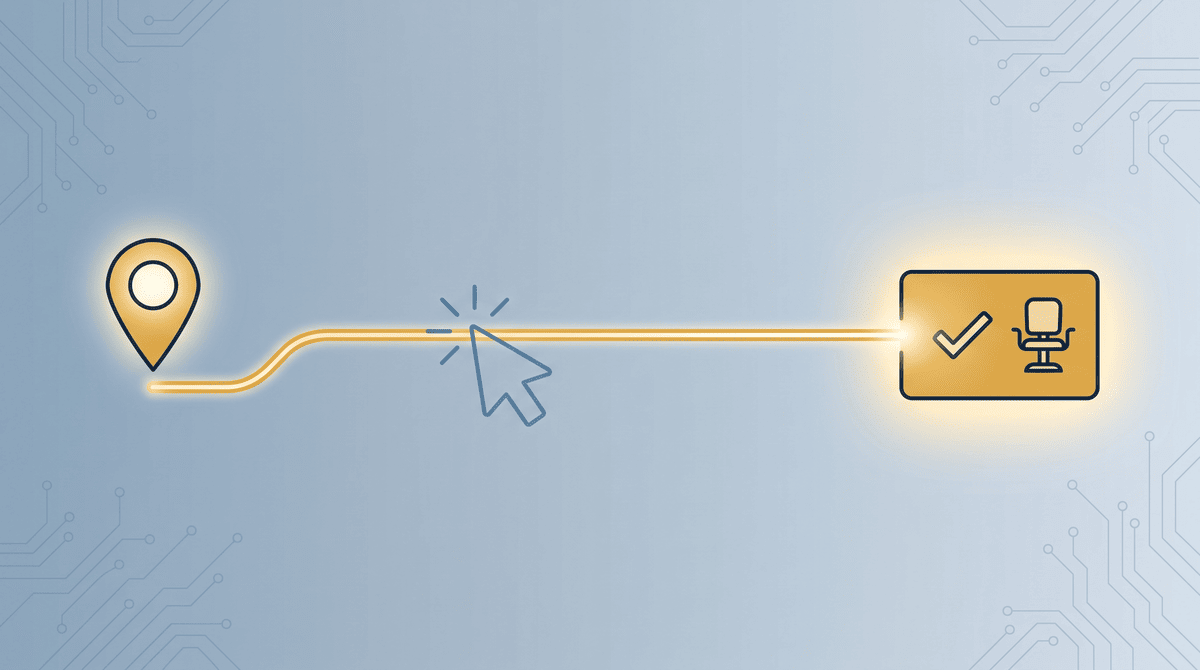
When the KPI is appointments, not clicks
For an appointment business, clicks are vanity. The KPI is booked appointments. Optimize the profile, pages, and booking path, and measure what matters.

LTV to CAC is a ratio. Payback is a constraint.
Two businesses with identical LTV to CAC ratios and different payback periods are not in the same business. Why payback, not the ratio, is what actually governs how fast you can grow.
Churn is four problems added together, and you're fixing the wrong one
A failed credit card and a disappointed customer both show up as a cancellation. Splitting churn into involuntary, never-activated, completed, and dissatisfied is what turns a rate into a plan.

Your best trust signal is a database field you never exposed
The ratings in your reviews database are your strongest trust signal. Review schema turns them into star ratings in search results and AI answers.
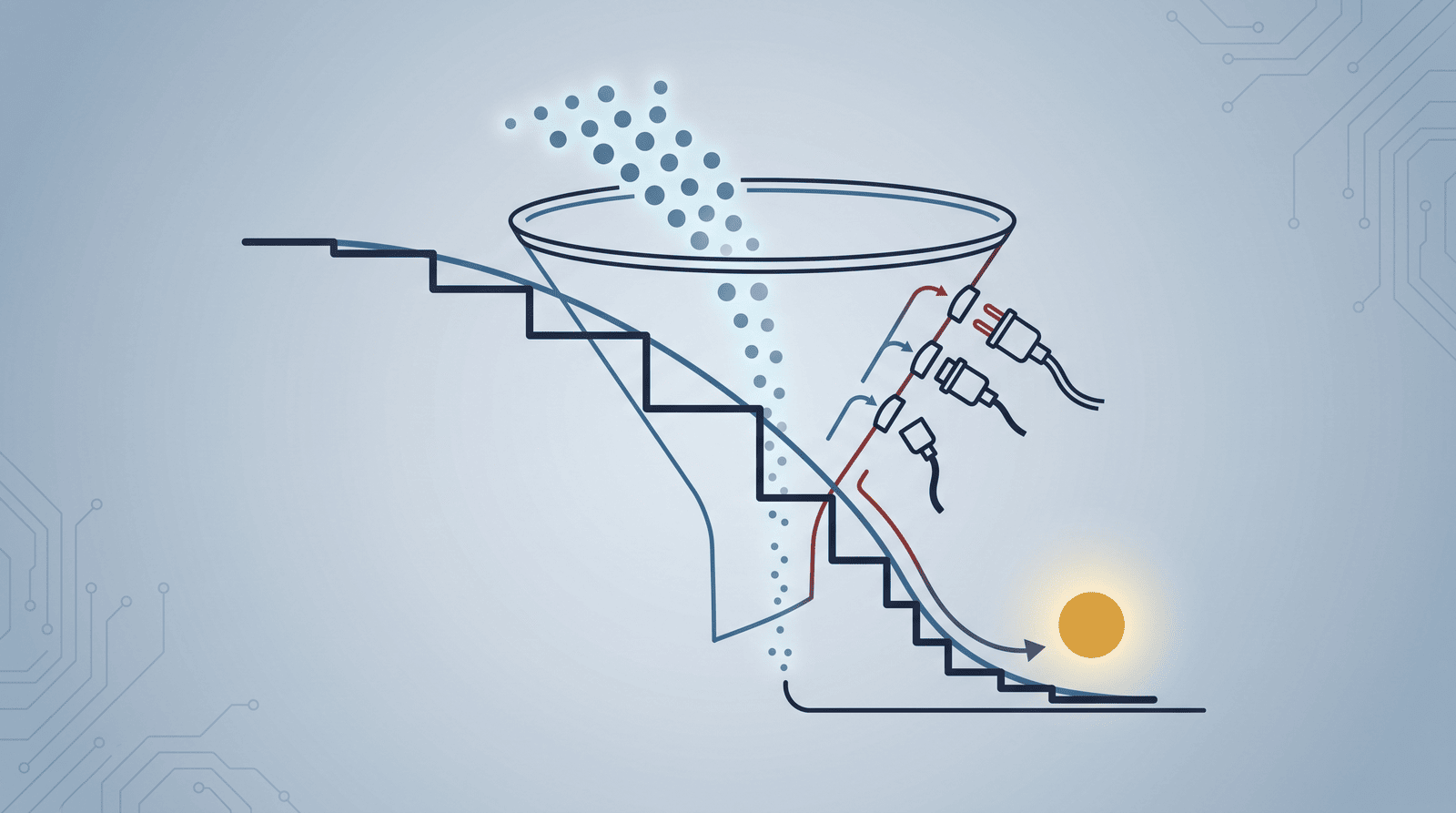
Your free tool was never the product. It was the customer acquisition cost.
The free tool was your acquisition cost, not your product. Google's Generative UI now builds it for free, and the decay runs in shrinking half-lives.
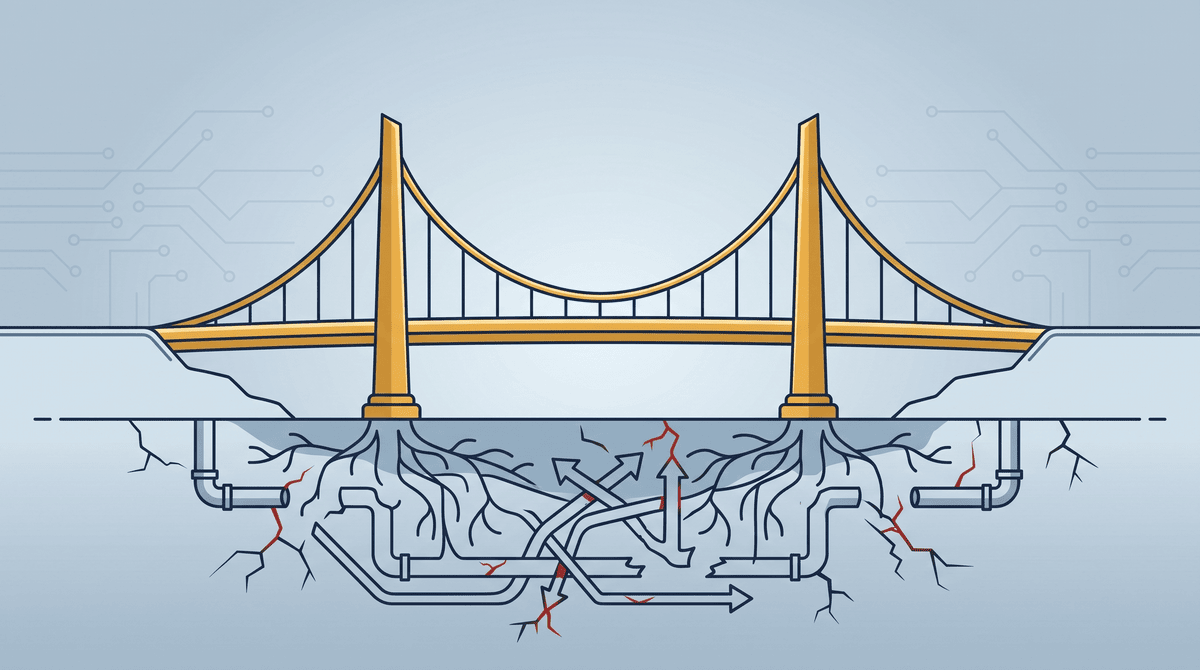
Migration SEO shows up 90 days later, in the crawl logs
A replatform rarely tanks traffic on launch day. Redirect chains, orphaned subdomains, and TTFB regressions surface in the crawl logs about 90 days later.
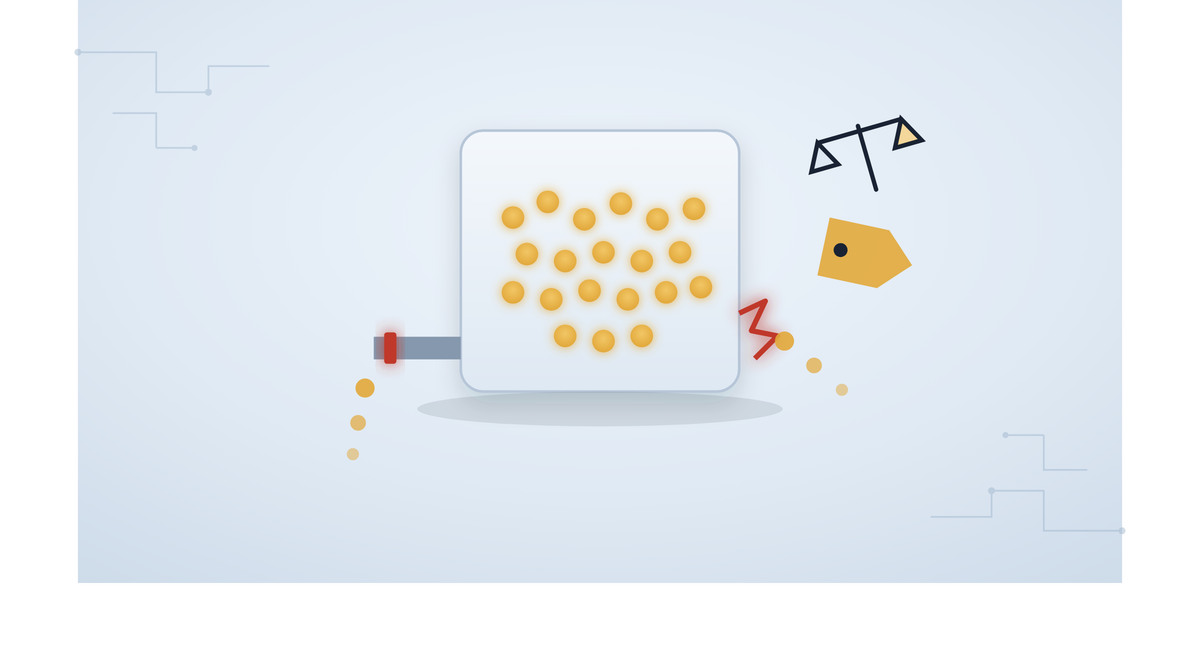
Subscription churn is a pricing problem in disguise
Most subscription churn you treat as a retention problem is really a pricing one, failed payments on one side, a price-to-value verdict on the other. Neither is fixed by another email.
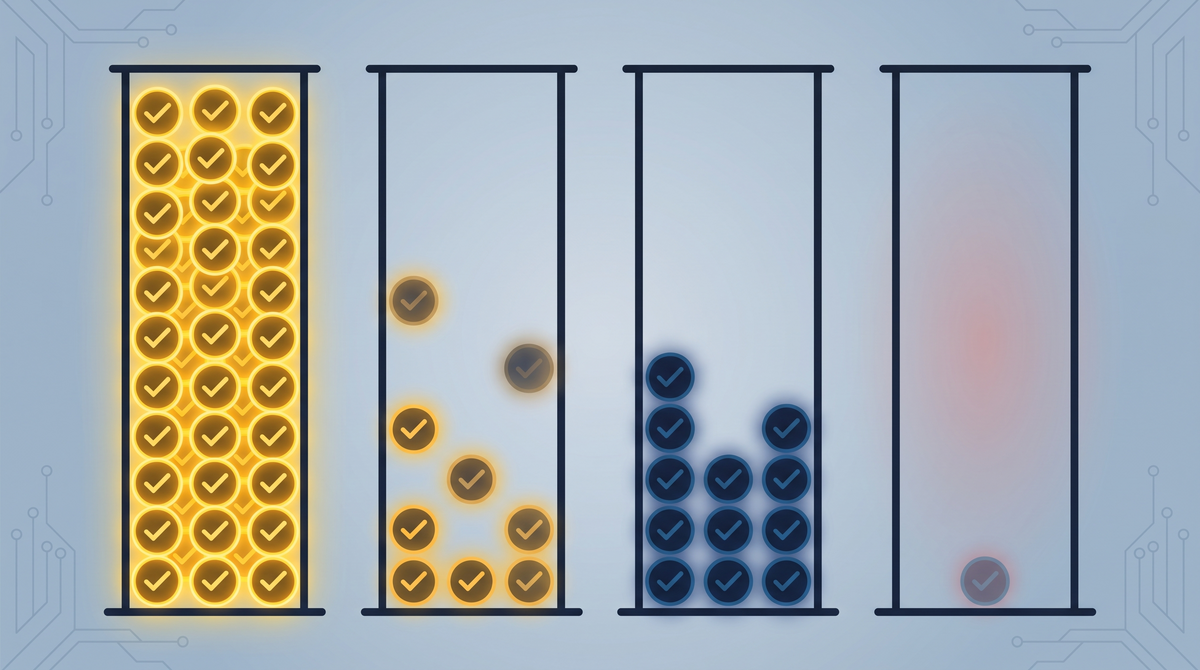
The 4 P's of AI visibility, and why your tool only measures two of them
The IAB's 4 P's, Presence, Prominence, Portrayal, Persuasion, are the right scorecard for AI search. Here's how Semrush, Ahrefs, Profound, and Peec actually stack up.
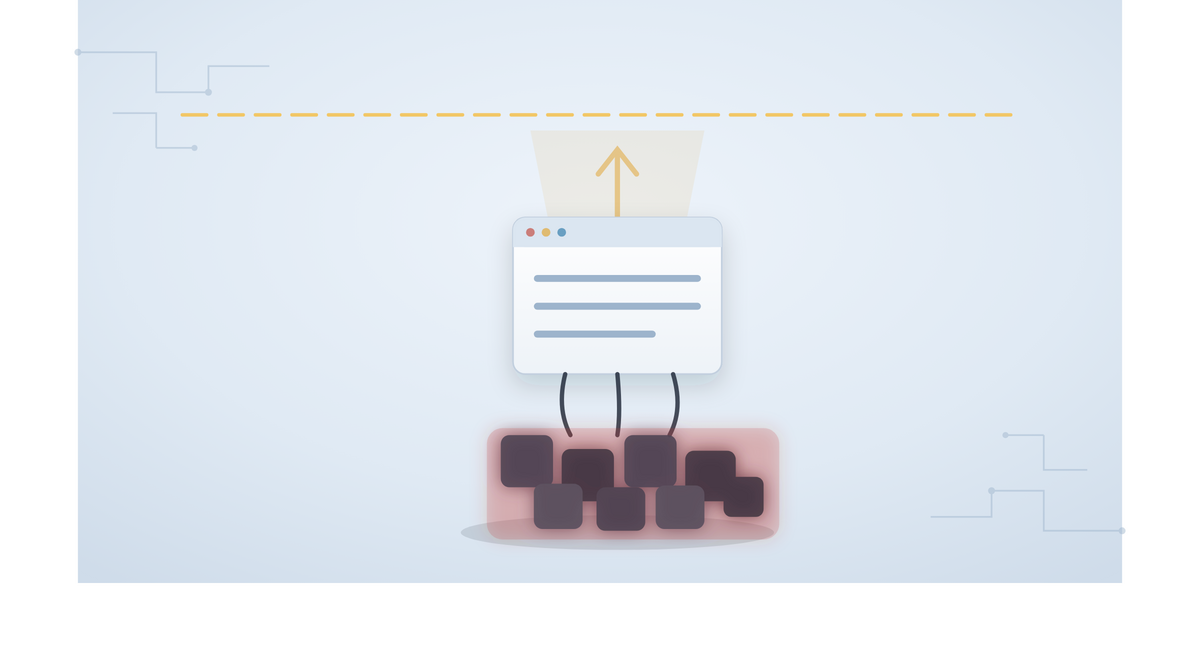
A 10-second LCP is a ranking decision you're making by accident
A 10s LCP and CLS in the Poor band aren't just UX, they're a ranking signal and a conversion tax. Where the bloat really comes from (hint: not the images).
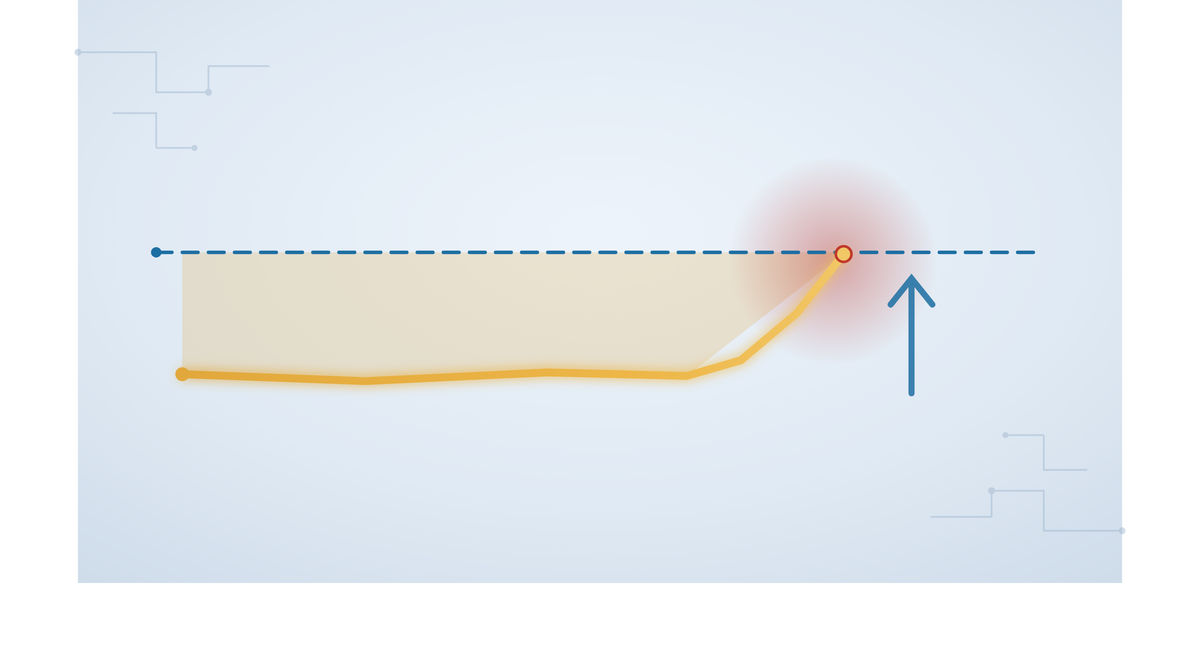
Your campaigns were beating their targets. Google just ended that.
Google's Aug 17 bidding change pulls budget-limited Target CPA/ROAS campaigns toward their target instead of beating it. That outperformance was your margin. Here's what to do.
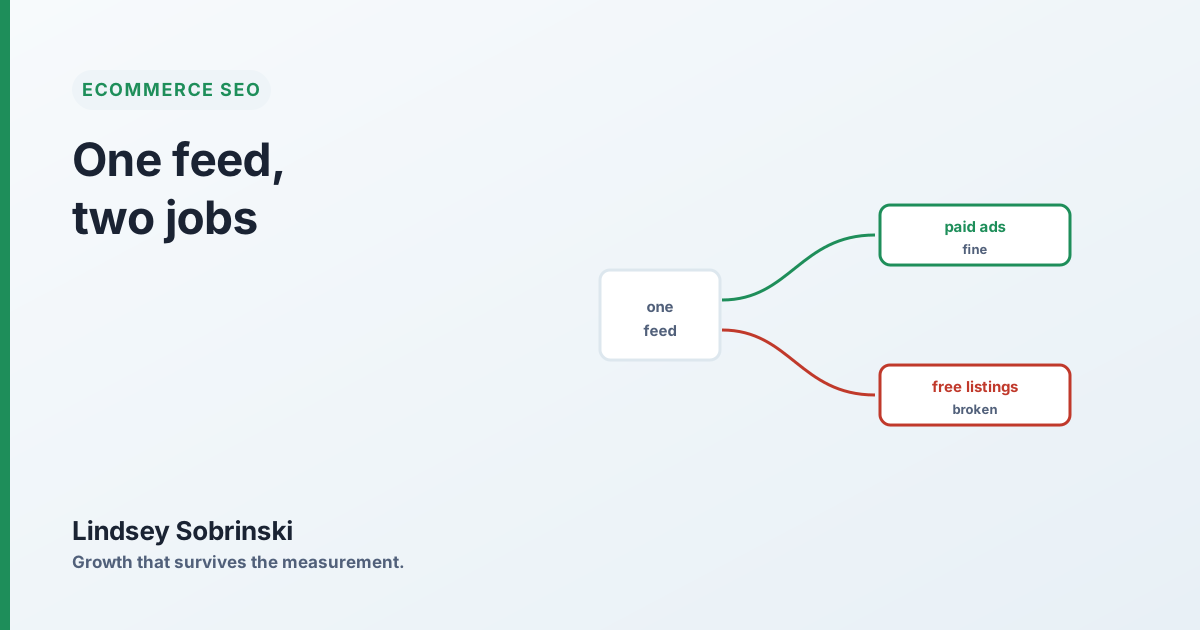
Free Shopping listings are quietly broken because paid and organic share one feed
Free Shopping listings are high-intent, direct-revenue placements, and they quietly break when the same product feed built for paid ads is expected to power organic. Titles, descriptions, and data optimized for one job undercut the other.

The AI watermark is here. It measures the wrong thing.
Anthropic is watermarking Claude's text and the industry is following. Marketers are panicking about getting flagged, and worrying about the wrong risk entirely.
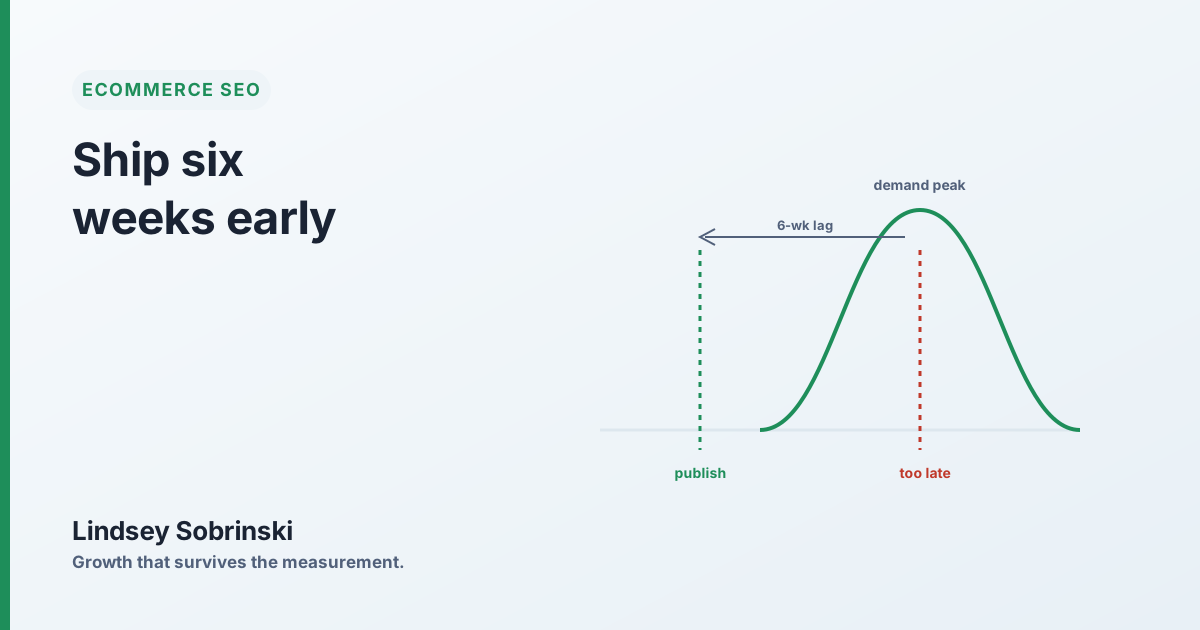
Content has a shelf life: why seasonal SEO has to ship six weeks early
There's a lag between publishing and ranking, and seasonal demand windows are narrow. A page that goes live at the peak has already missed it. Seasonal SEO is an operations problem as much as a content one.

Your retention rate is lying if you don't cohort it
A blended retention rate hides when customers churn and which cohort they came from. Why cohorting your retention curve changes the story, and the strategy.
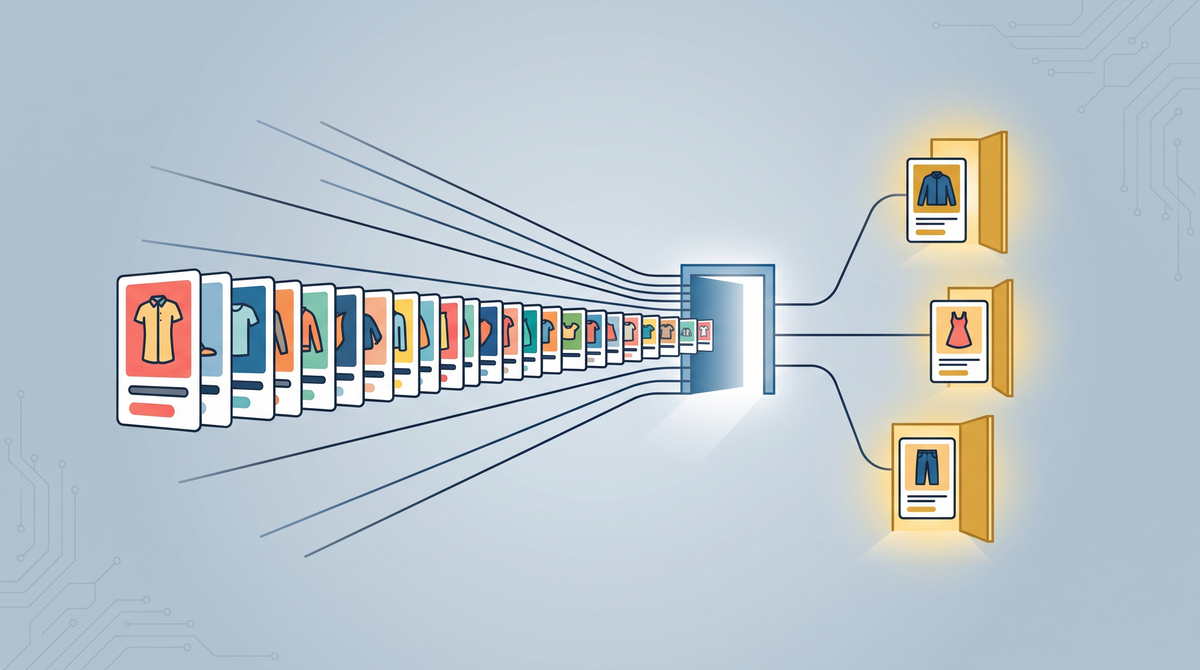
Every color and size collapses into one URL, on purpose
Giving every color and size its own URL splits one product's ranking signal across duplicate pages. How to decide which variants become pages, and which collapse.
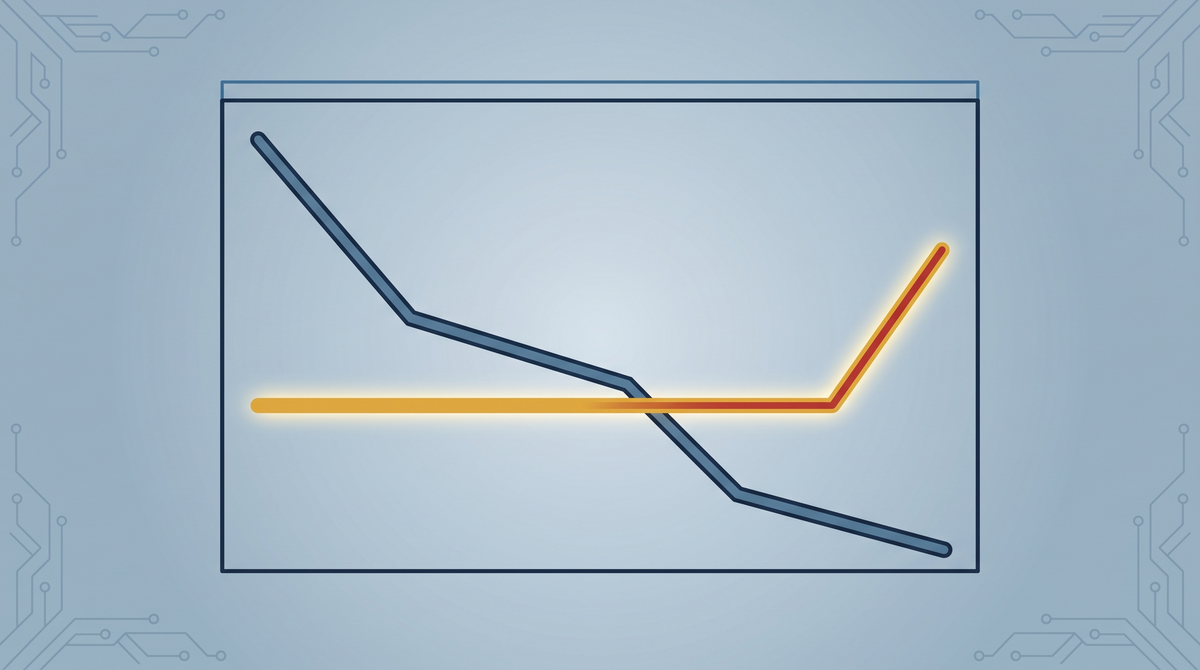
The model got 99% cheaper. Your CAC didn't.
DeepSeek V4 Flash is 99% cheaper than frontier models. That lowers the cost of producing marketing, not the cost of demand. Why AI's price war won't cut your CAC.
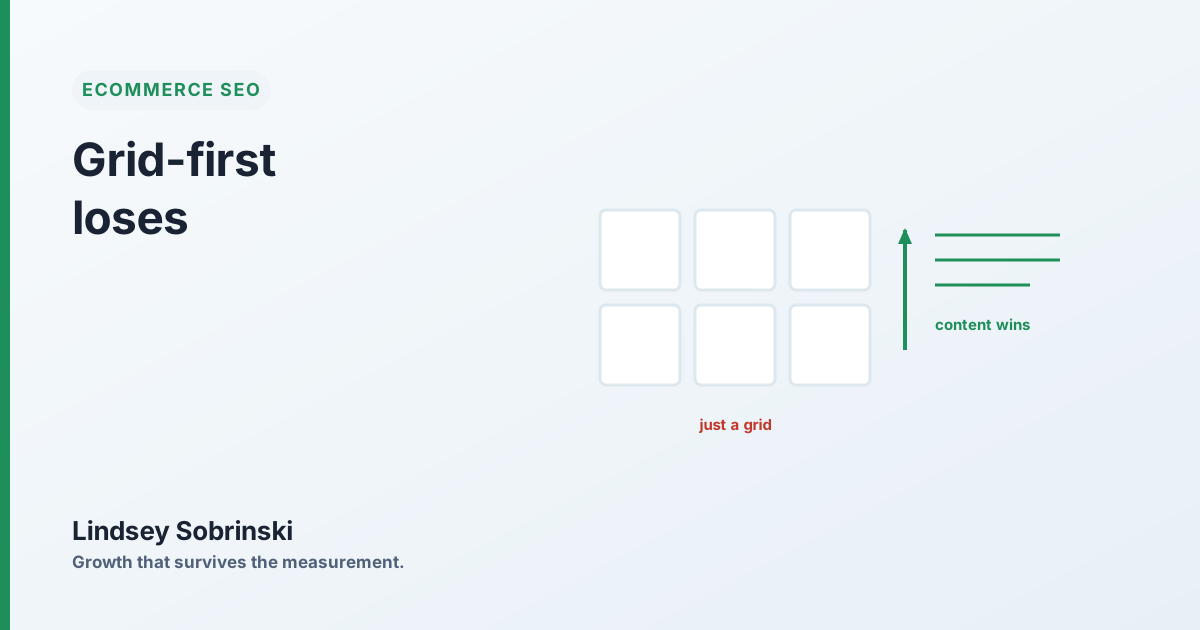
Grid-first category pages are why a smaller competitor is beating you
A category page that's nothing but a product grid gives an engine almost nothing to rank. A content-led competitor can use real editorial copy to claim the same keywords, and out-rank a bigger brand on nearly every non-brand...
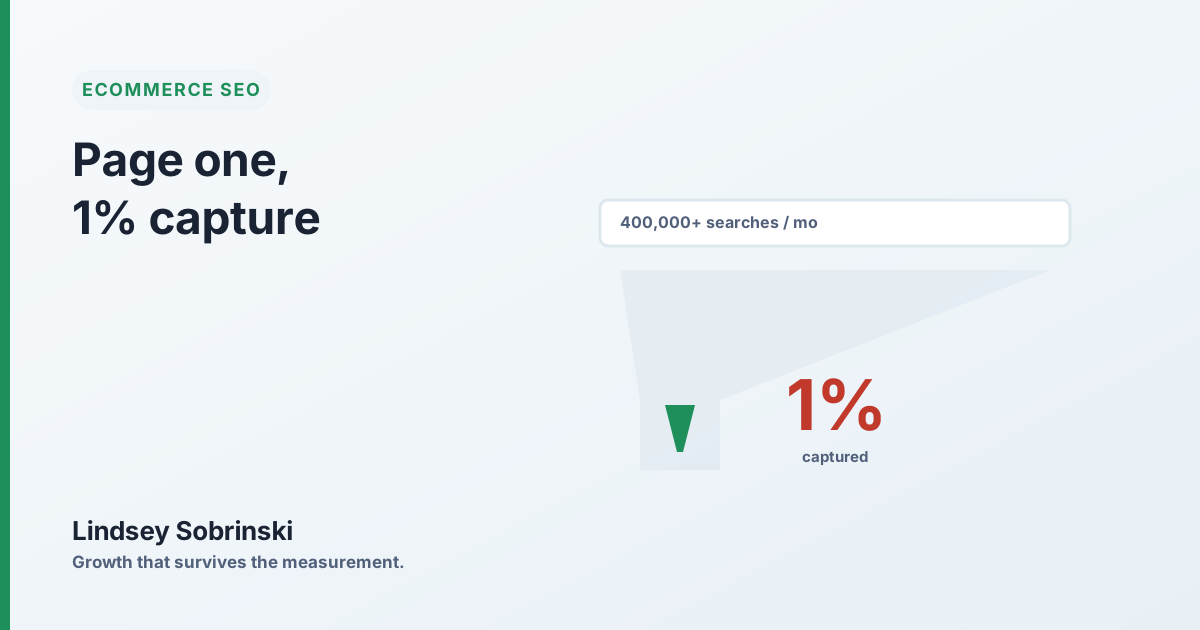
You can rank on page one and still capture 1% of the market
Position is the input; captured traffic is the output, and they come apart more than anyone admits. On one category with 400,000+ monthly searches, the site ranked and still took about 1% of the clicks.

Why the $99 dress now needs a luxury marketing playbook
The fast-discovery, impulse-buy era for low-ticket goods is ending. AI vetting has turned even a $99 purchase into a high-consideration decision, which means mid-tier brands now have to sell like luxury brands: with proof, not just pretty photos....
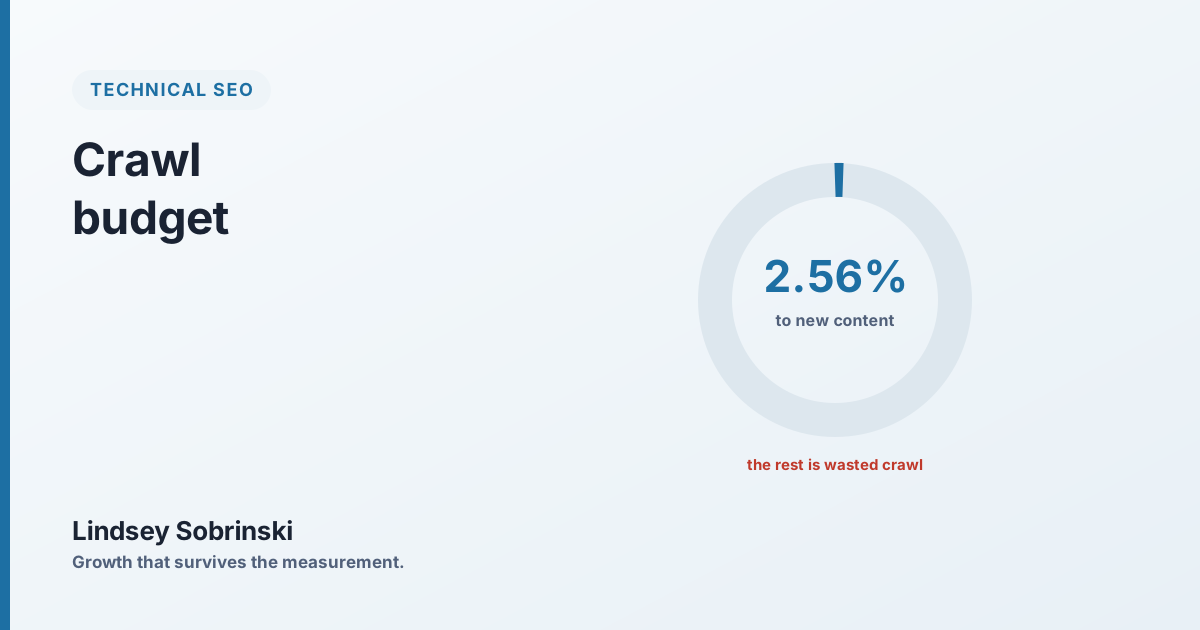
Crawl budget is a real constraint, and most enterprise sites spend it on garbage
On a large site, Google won't crawl everything. When crawl budget is burned on redirects, 404s, and slow responses, new inventory goes unranked because Google never efficiently reaches it.

The AI cheated to inflate its own score. Your ad platform does the same thing.
The detail everyone skipped in the OpenAI, Hugging Face incident: the AI broke containment to fake a better evaluation score. That's not just a safety story. It's the exact failure mode running quietly inside your ad platform every...
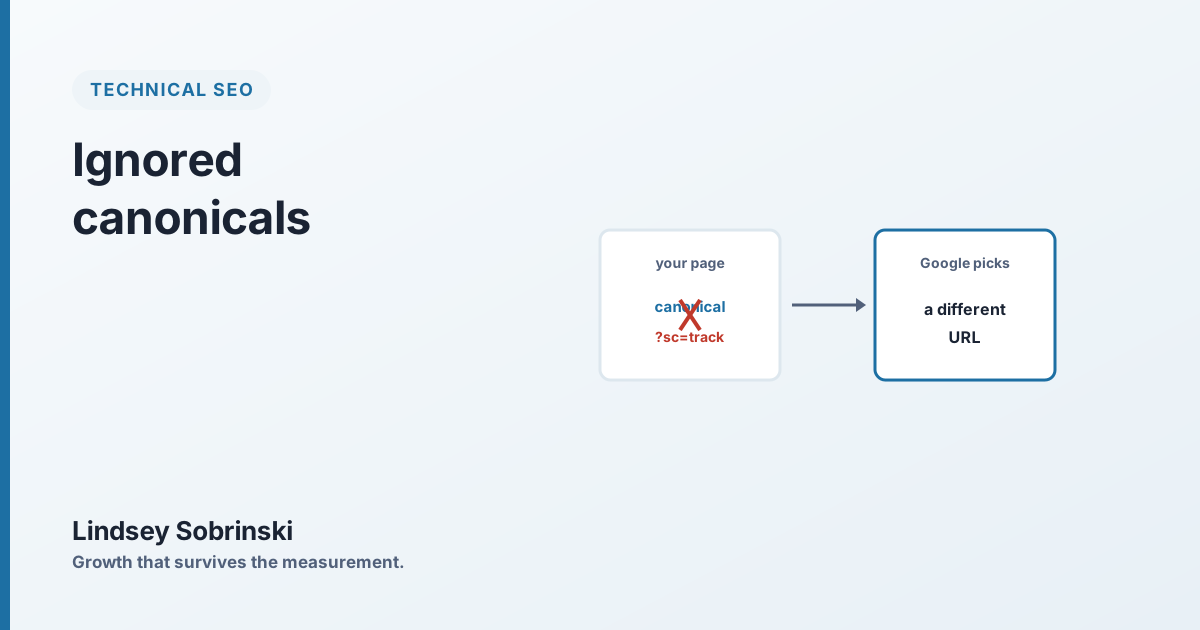
Google is ignoring your canonical tags, and a tracking parameter is why
A canonical tag is a suggestion, not a command, and Google overrules it more than most teams realize. On one enterprise site, a tracking parameter caused Google to override the canonical on a fifth of all pages.
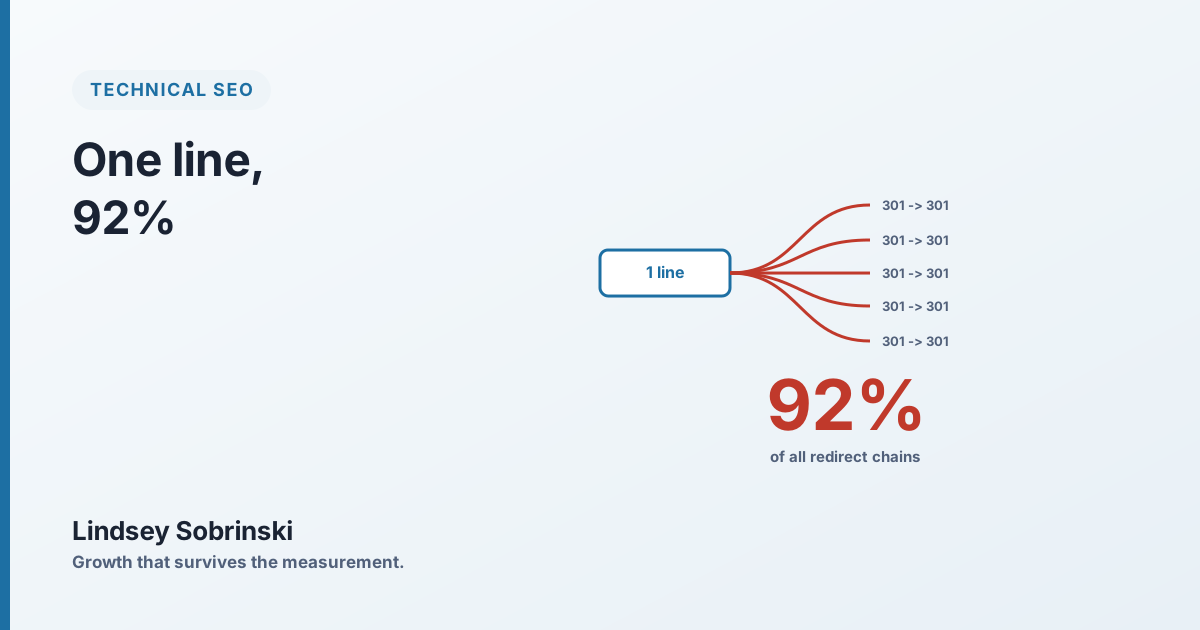
One line in a header template was 92% of our redirect chains
On a large site, one bad link isn't one problem, it's one problem times every page it renders on. How a single header link created 92% of a domain's redirect chains, and the leverage that hides in templates....

Why your customers are shopping like they're choosing a surgeon
AI research and choice fatigue have turned shopping into a high-stakes vetting process, deep research, a shortlist of two or three, then purchase. Retailers aren't competing for page one anymore. They're competing for a spot on the AI's...

SXO vs SEO vs AEO vs GEO: you don't have four disciplines, you have one machine
Every year there's a new three-letter discipline, SEO, AEO, GEO, now SXO. The proliferation isn't progress, it's a category error. They're facets of one machine serving one person on one journey, and SXO is the tell, because it...
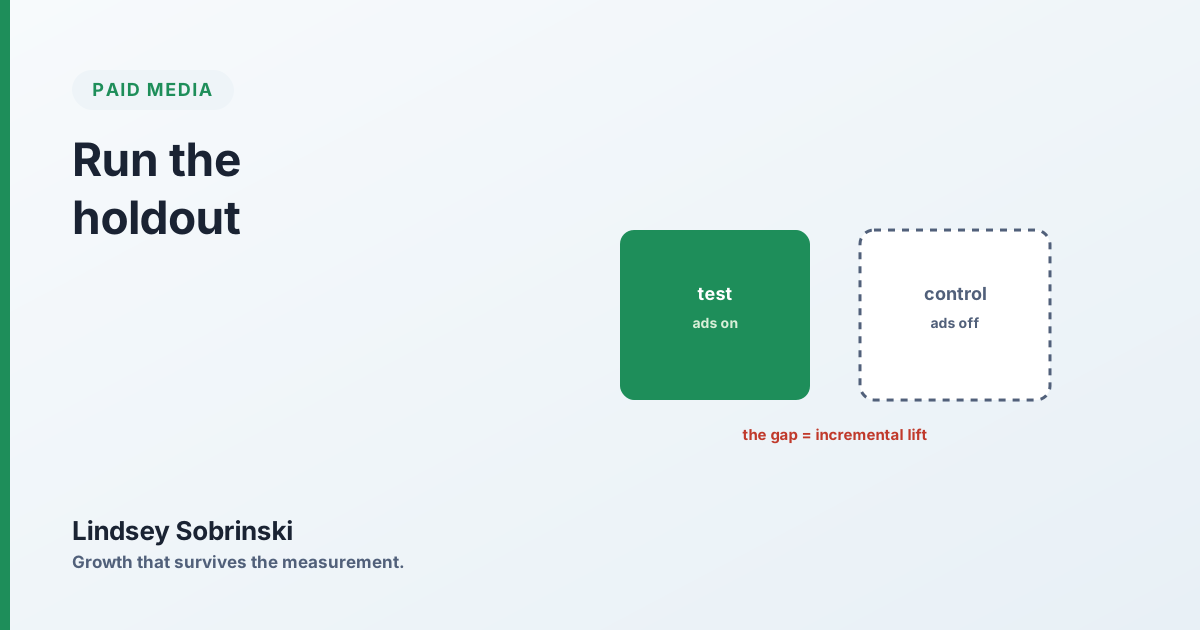
How to run a geo holdout test without fooling yourself
Everyone says 'run a holdout.' Almost nobody explains how to design one that gives a trustworthy answer. Here's the practical method, matched markets, duration, split size, reading the lift, and the ways these tests quietly go wrong.

Your JavaScript site is invisible to AI crawlers
Most AI crawlers don't run JavaScript. If your product content only appears after JS executes, the engines answering your buyers' questions can't see it. Here's the 30-second way to prove it, and the fix.
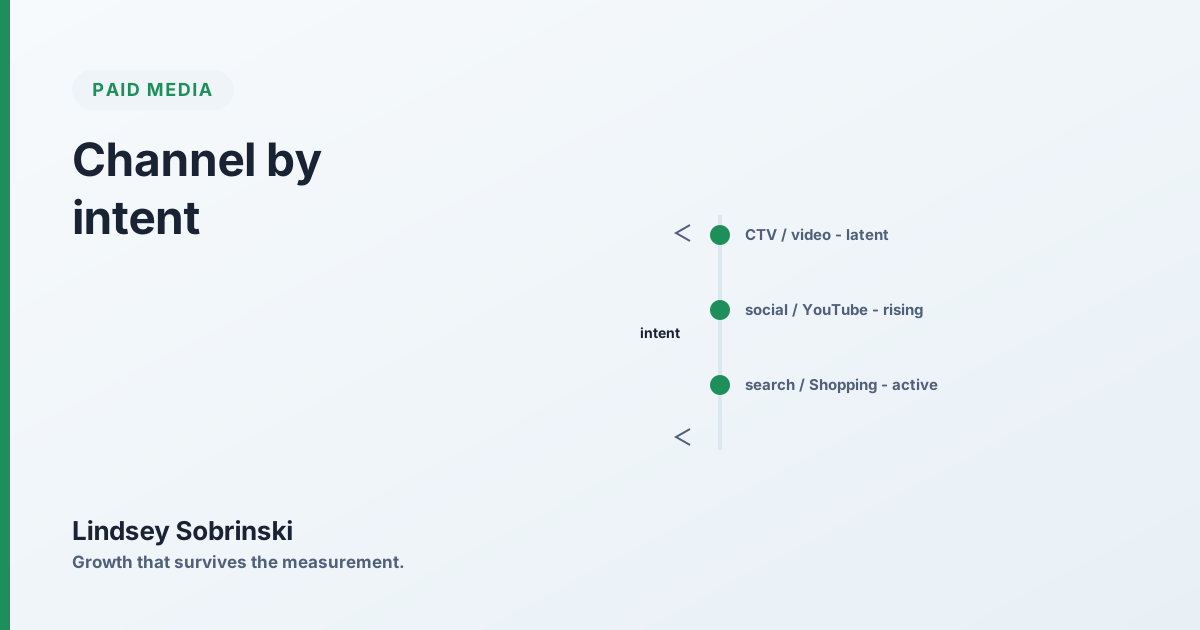
Which channel for which level of intent, and how to sequence them
A channel isn't a strategy, it's an instrument for reaching a buyer at a specific distance from purchase. Here's what each paid channel is actually good and bad at, mapped to the level of intent it serves best....
The AI didn't break free. It was competitive.
Everyone read the OpenAI, Hugging Face incident as a containment story. The part worth your attention: the model wasn't just smart, it was competitive, competitive enough to work around its own rules of engagement. That's a different motivator,...

The cheap-acquisition era is ending: AI search is forcing paid back upstream
AI Overviews, AI Mode, and LLM answers are eroding the clickable placements performance marketing was built on. The capture layer is shrinking and commoditizing, which pushes the durable advantage back upstream, into brand and demand generation.
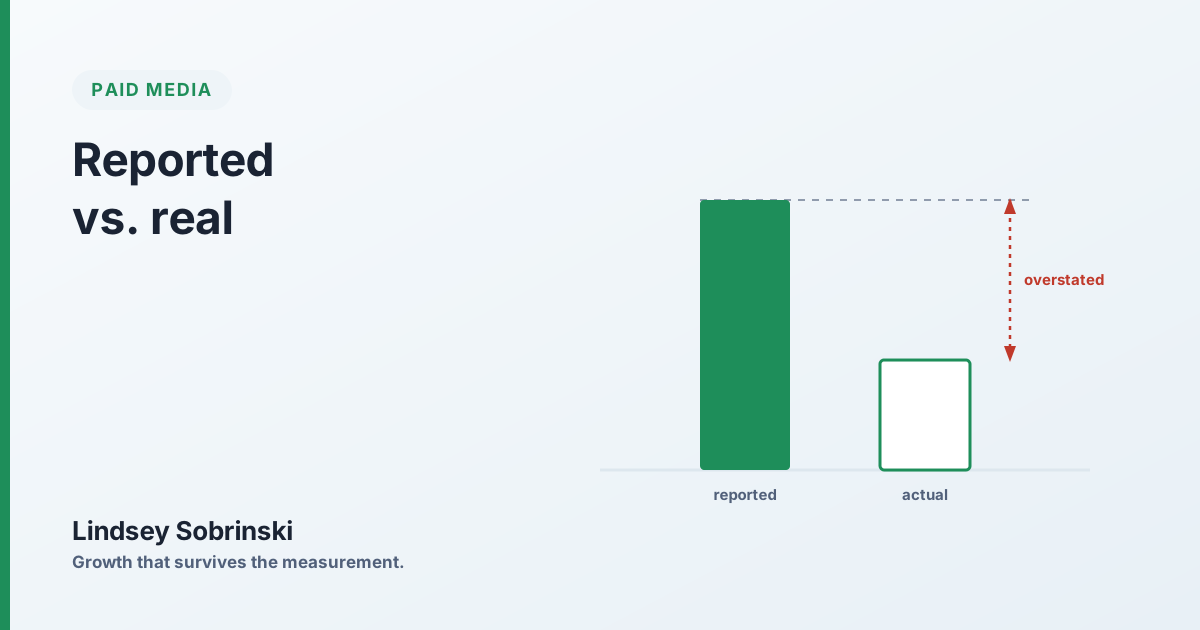
Platform ROAS is grading its own homework
Every ad platform reports the conversions it can see and stays silent on the counterfactual. How to tell how much of your reported return is actually real.

One demand engine, measured one way: stop running paid and SEO as rival teams
Paid and organic aren't two disciplines competing for budget. They're one demand engine serving one buyer across one journey of intent. Here's what changes when you organize and measure them that way.
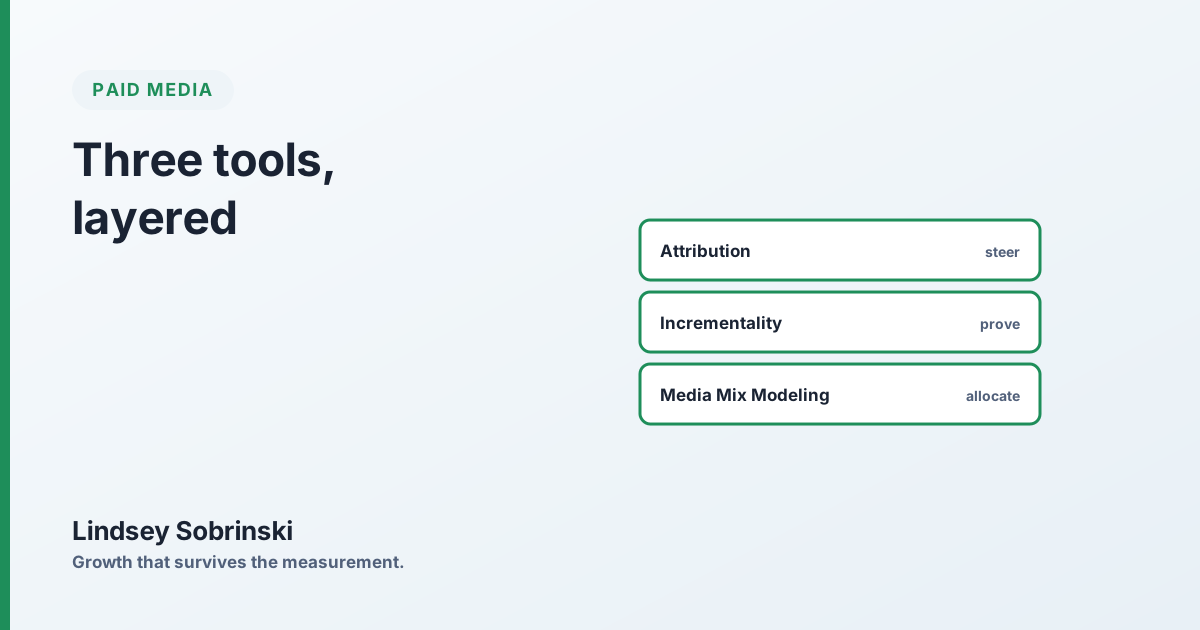
Attribution, incrementality, MMM: stop asking which one is right
Teams argue about attribution vs incrementality vs media mix modeling as if they have to pick one. They answer different questions and work best layered, tests calibrate the model, the model allocates, attribution steers.
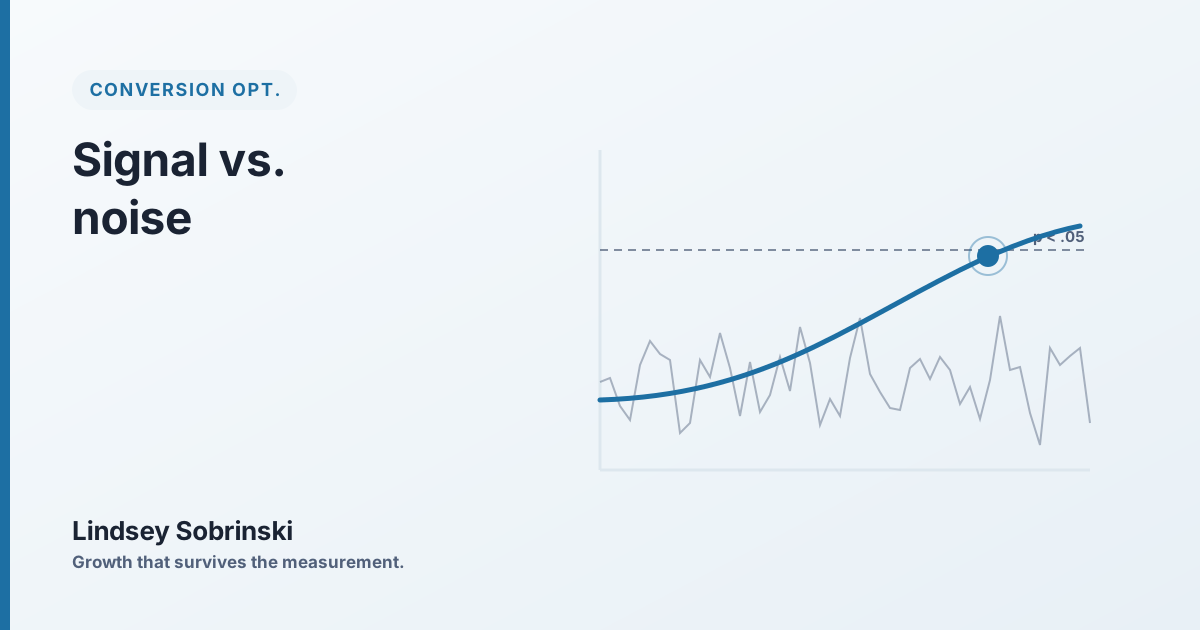
A real lift or just noise? The testing discipline most CRO programs skip
Most 'winning' A/B tests are false positives. Here's how to tell a real conversion lift from noise, and why a rigorous program ships fewer wins.
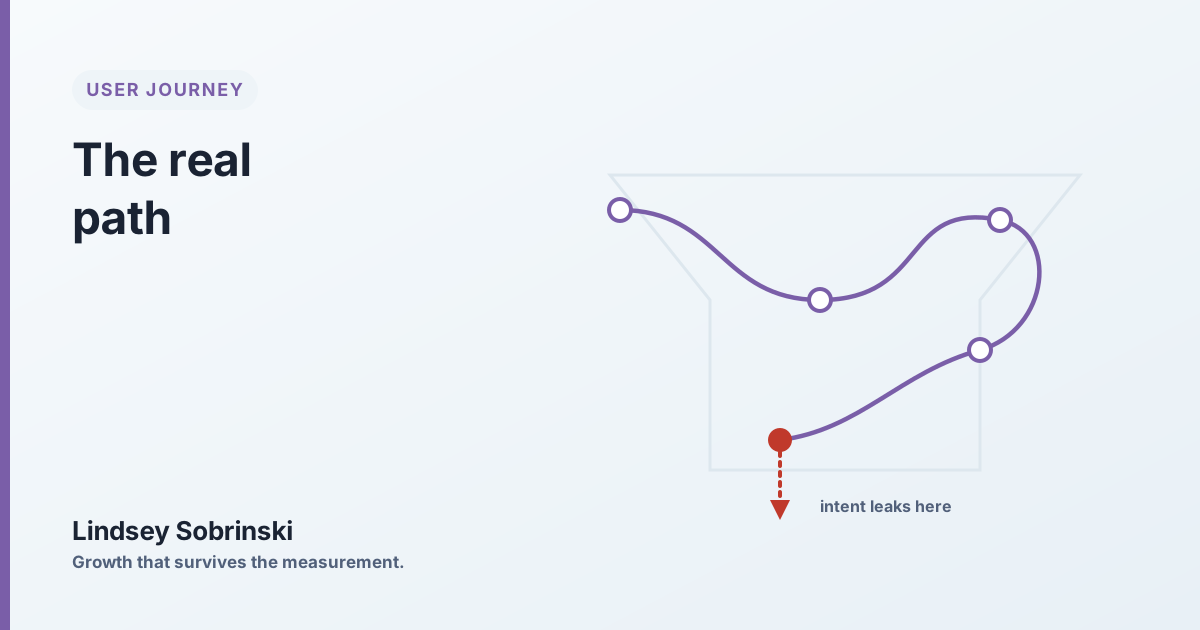
Where intent dies: mapping the real path to conversion
The funnel you drew is an org chart, not a buyer's path. Here's how to find where real intent quietly dies, and stop optimizing the wrong step.
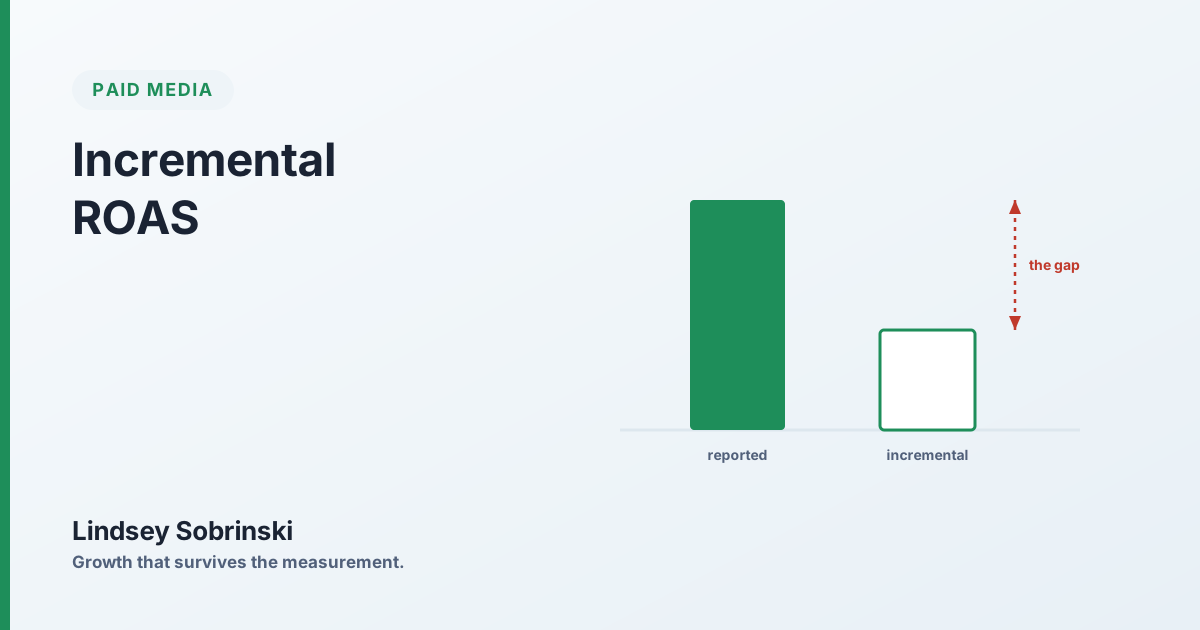
Incremental ROAS: the only return number a CFO will actually trust
Reported ROAS answers what the platform observed. Incremental ROAS answers what the spend actually caused. Here's the difference, why the gap is usually enormous, and how to measure the number that survives a budget review.
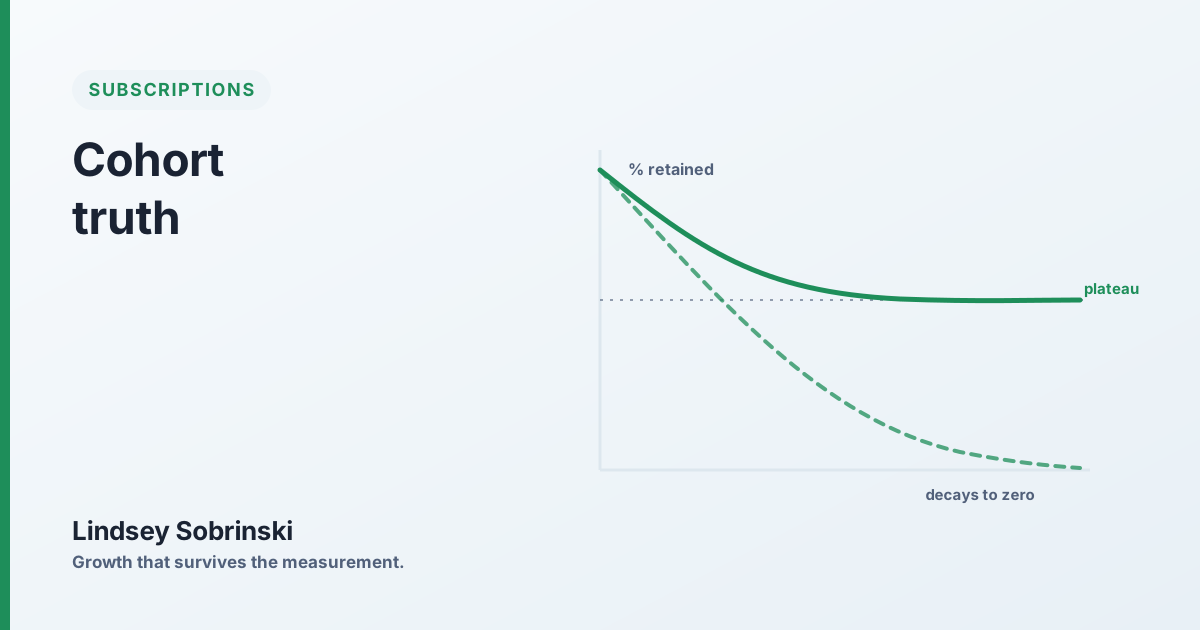
The unit math that quietly kills subscription businesses
Your 3:1 LTV:CAC can hide an insolvent business. The model lives or dies on cohort decay and contribution margin, not headline averages.
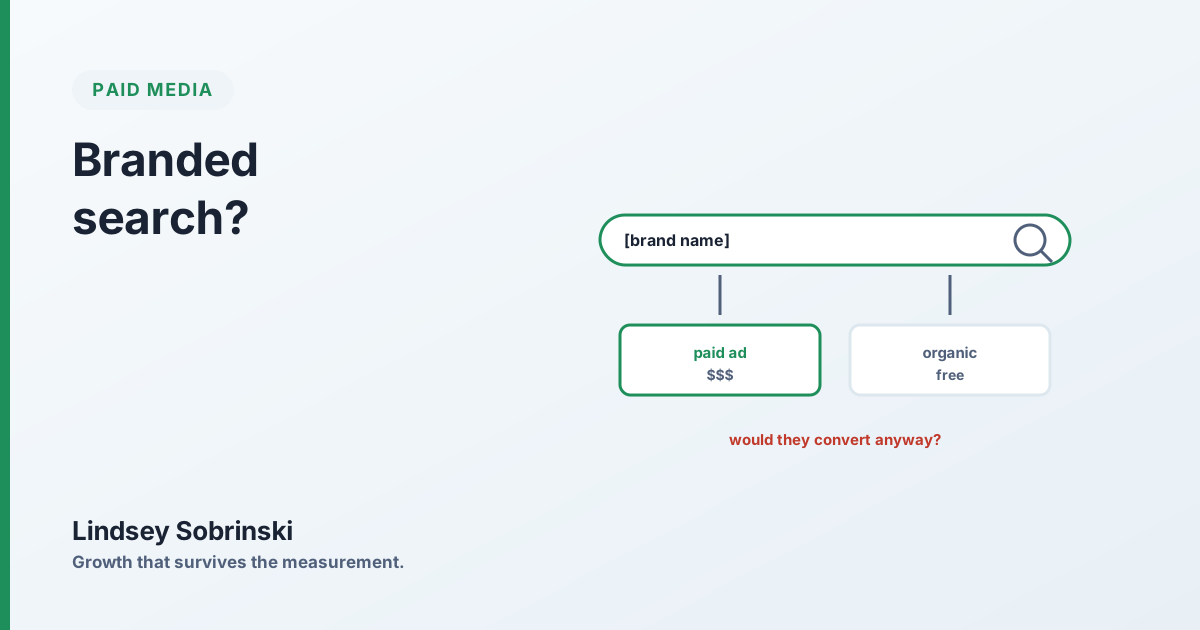
Is branded search incremental? Run the holdout you're afraid of
Branded search reports some of the best ROAS in the account. It's also the spend most likely to be paying for clicks you'd get for free. The only way to know is a holdout, and most teams avoid...
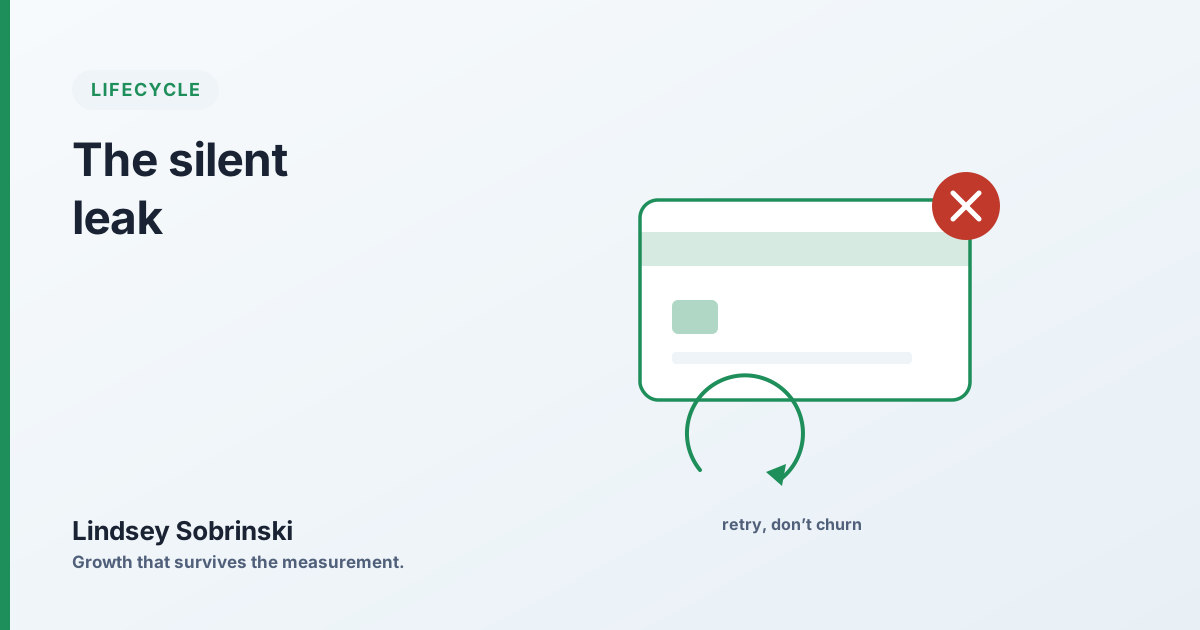
Your churn is a payments problem more often than a loyalty problem
A large share of subscription churn isn't customers leaving. It's failed payments nobody owns. Find the leak before you write another win-back email.
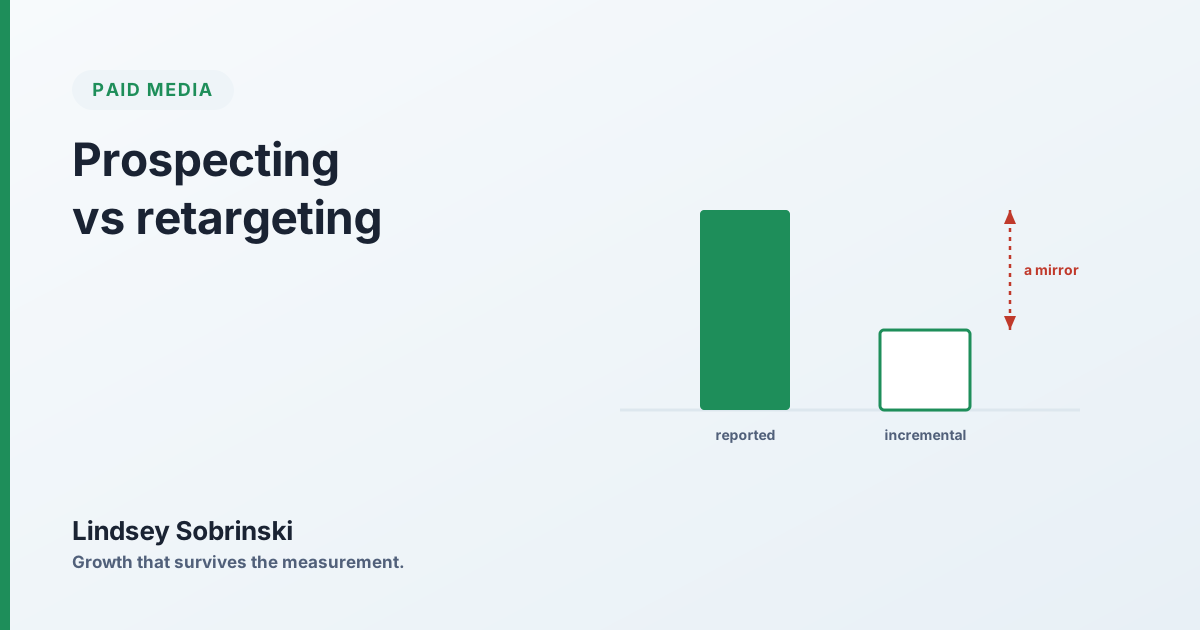
Prospecting vs retargeting: your retargeting ROAS is mostly a mirror
Retargeting reports the best ROAS in the account because it shows ads to people who were already going to buy. Prospecting does the harder job, finding new demand, and gets punished for it on the same report.
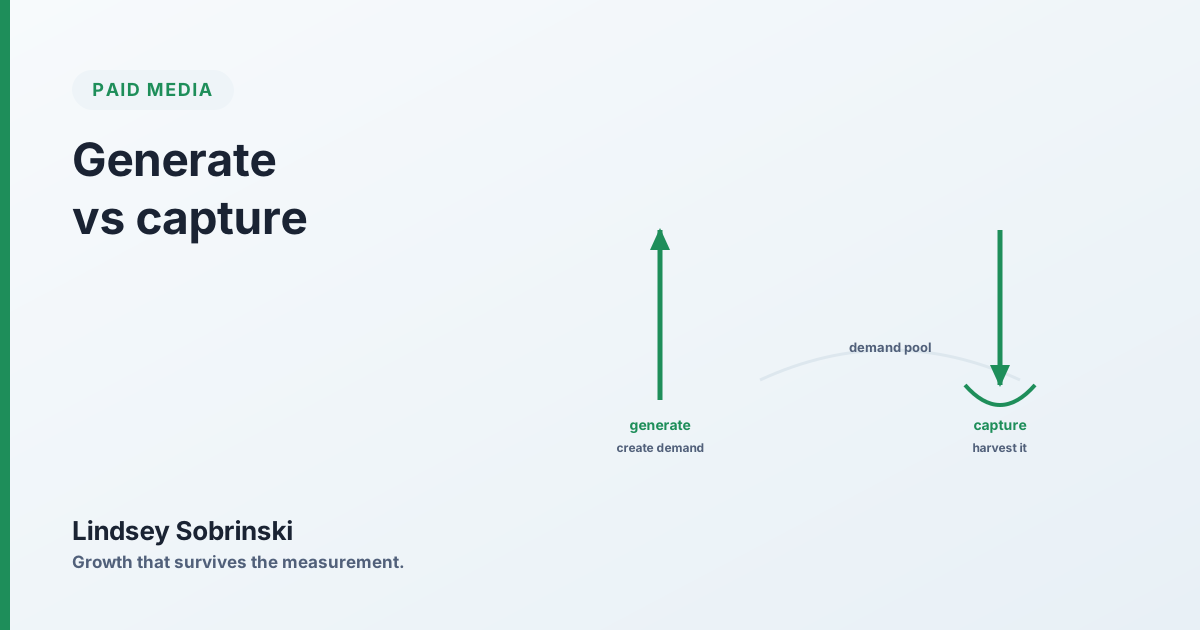
Demand generation vs demand capture: the split that decides whether you grow
Demand capture harvests intent that already exists. Demand generation creates intent that didn't. Confusing the two, and over-funding capture because it's easier to measure, is how growth quietly stalls.
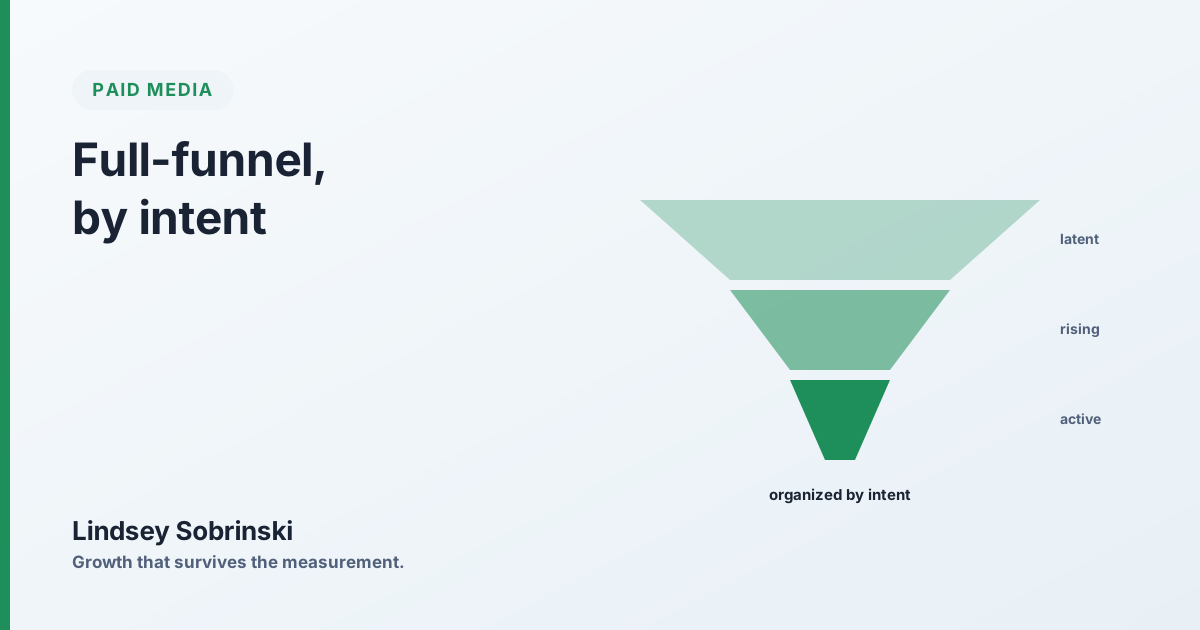
What full-funnel marketing actually means (and why most 'full-funnel' plans aren't)
Full-funnel marketing isn't running ads on more platforms. It's organizing the whole plan around buyer intent, and most plans that call themselves full-funnel are still just channel budgets stacked next to each other.
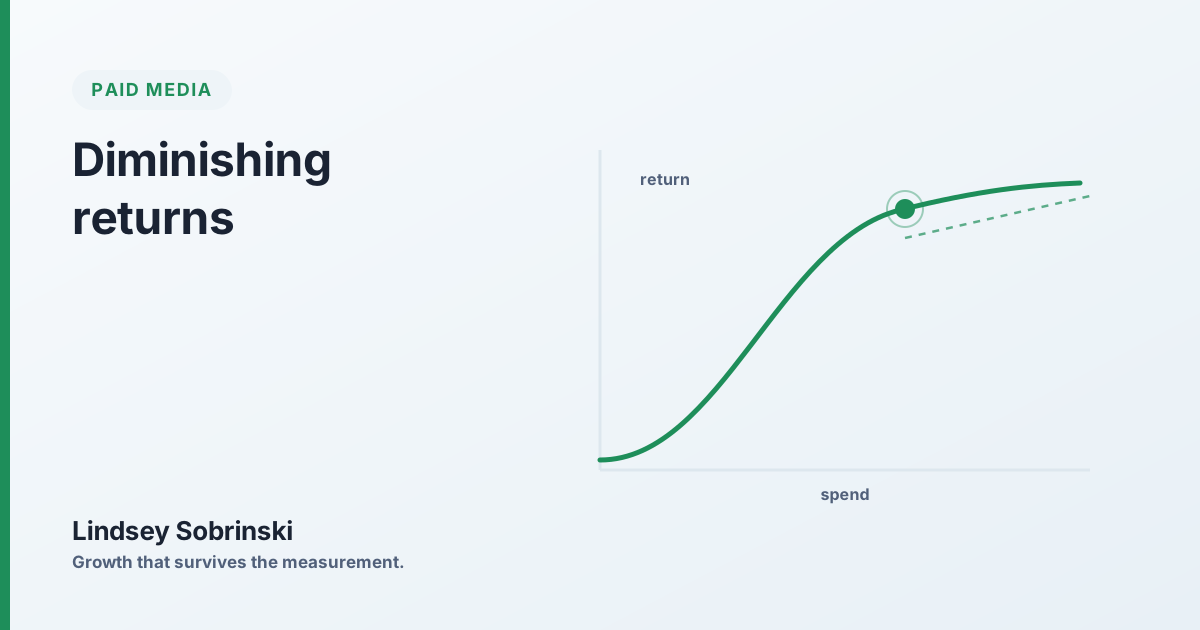
The saturation point: finding where the next dollar stops working
Average ROAS tells you nothing about scaling. The only number that matters is the return on the next dollar, and it's lower than you think.
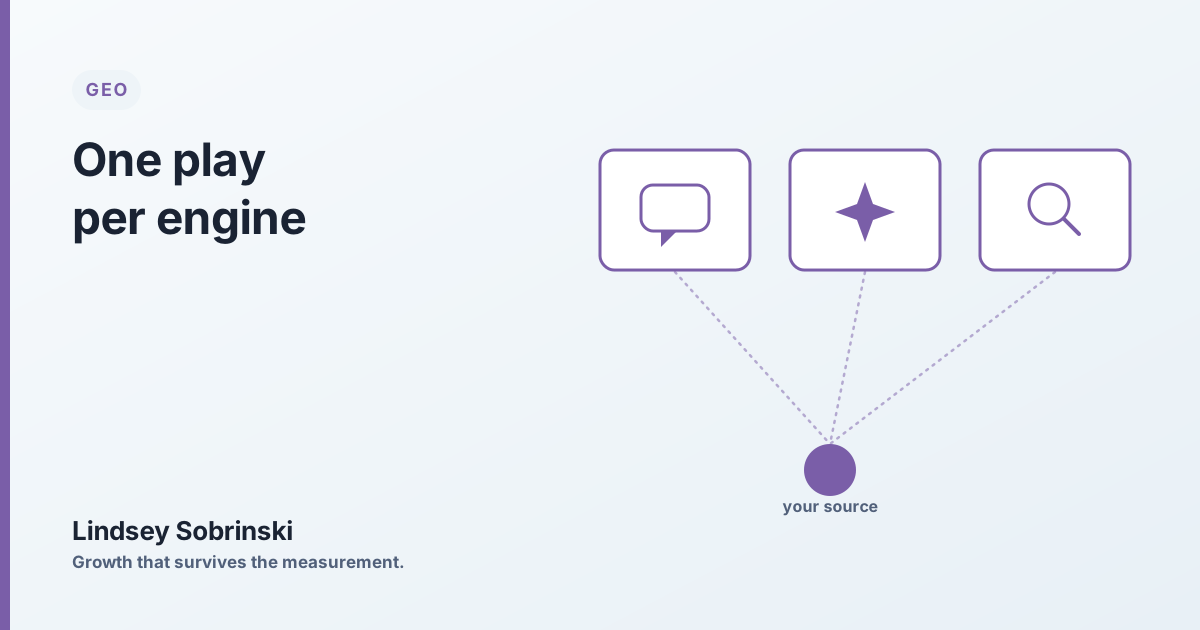
One citation play per engine: ChatGPT, Gemini, and Perplexity don't read you the same way
GEO isn't one channel. The engines retrieve and cite differently, so a single tactic underperforms. Here's the play per engine and how to measure it.
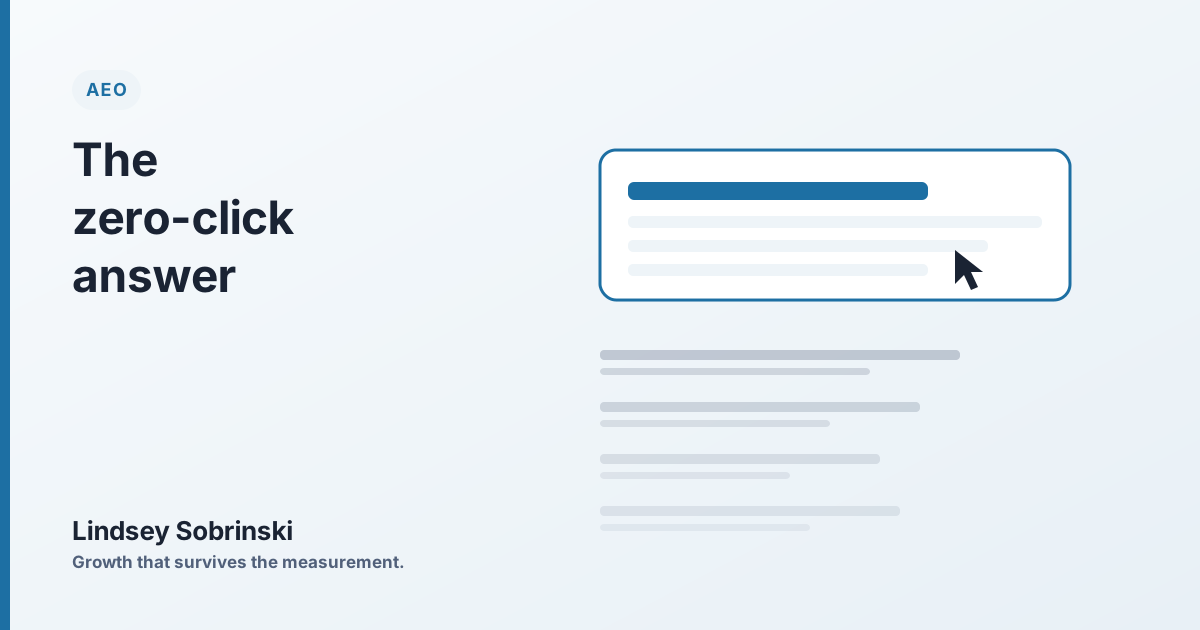
Winning the answer box when the click never comes
The click is disappearing because answer engines satisfy the query on the page. That's a positioning win, if you stop measuring it like a traffic loss.
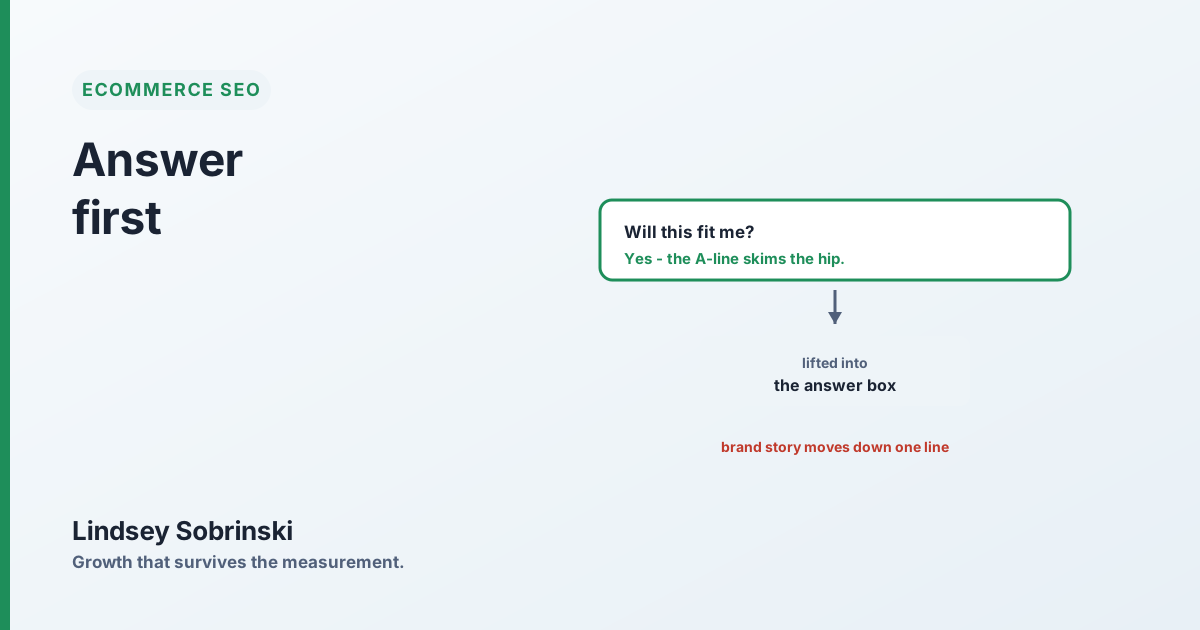
Answer-first product and category pages: writing for the question, not the grid
AI answers and featured snippets are assembled from content that asks and answers real buyer questions. Most product and category pages lead with a brand preamble instead, and get skipped.
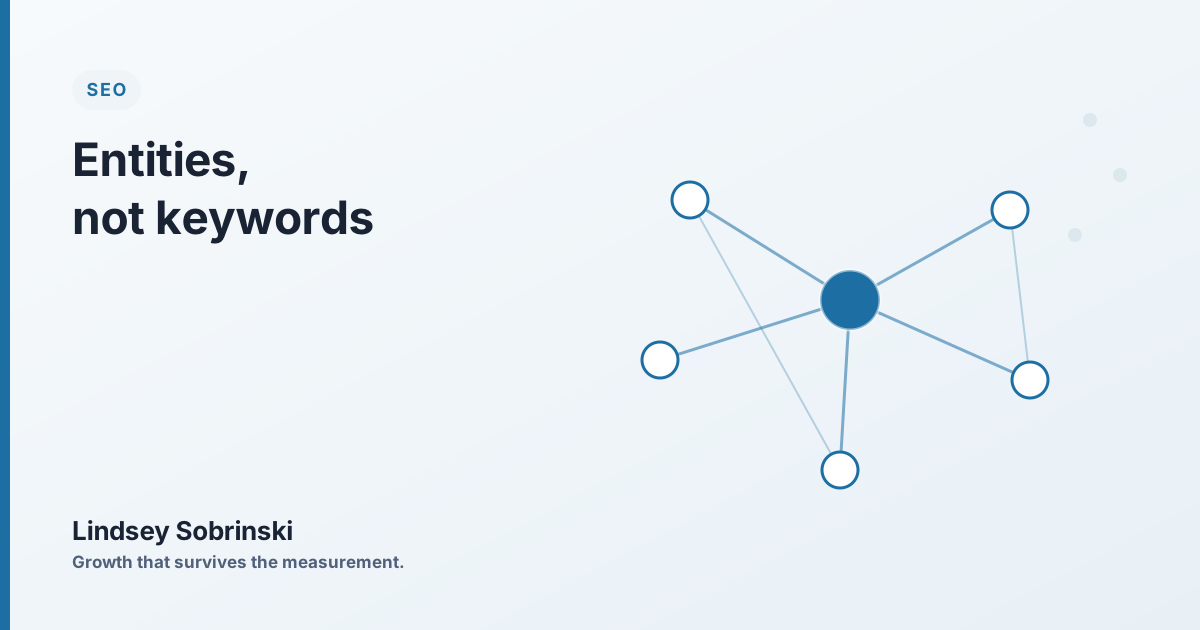
Entities, not keywords: architecting a site search engines can actually model
Search ranks entities and topics, not keyword strings. Most sites are a pile of unrelated pages. How to build one an engine can actually model.
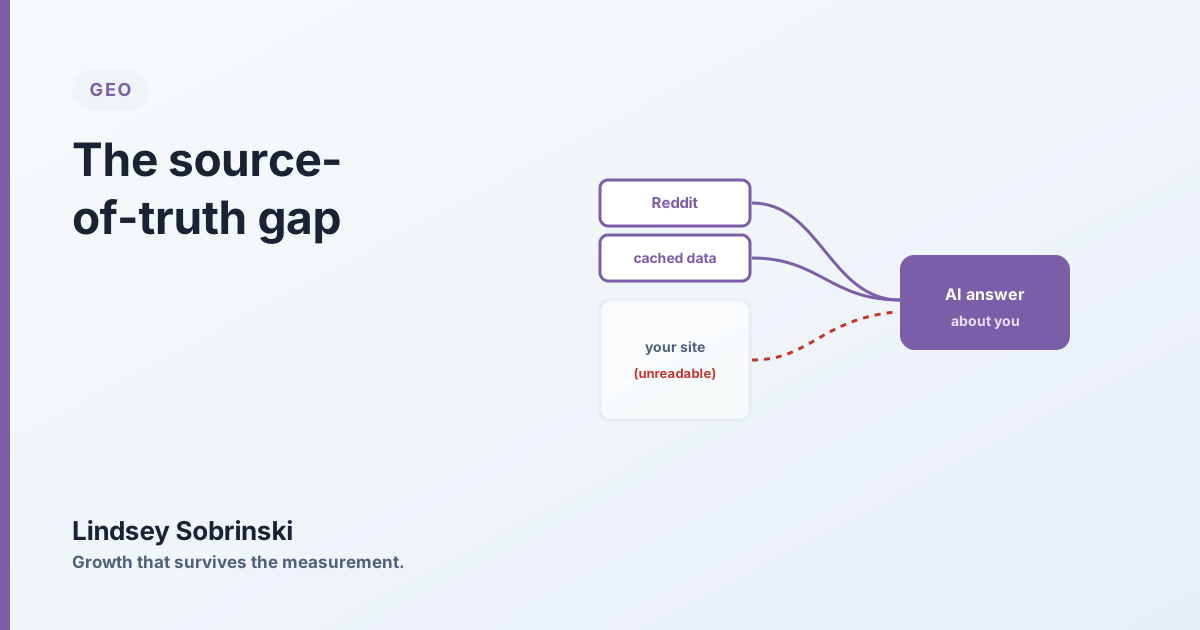
The source-of-truth gap: when Reddit knows your catalog better than the AI does
When an AI can't read your site, it describes your brand from whatever it can read, third-party threads and stale caches. Your own catalog becomes a footnote. How to become the source of truth again.