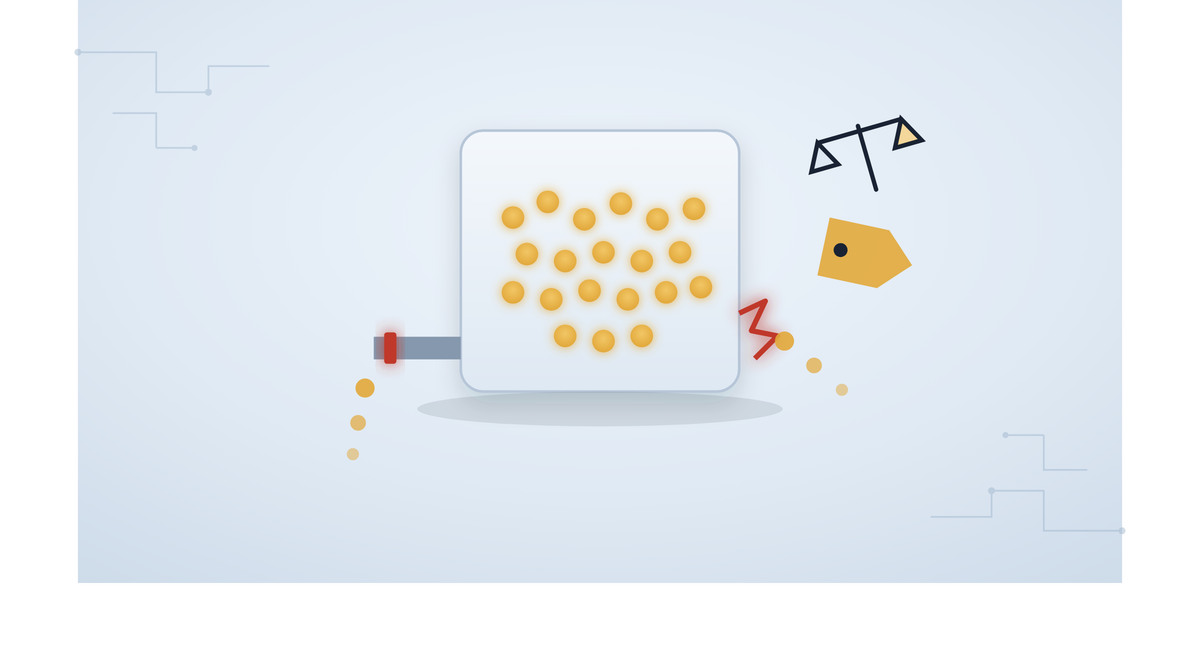
Most of the subscription churn you’re treating as a retention problem is really a pricing problem wearing a costume. On one side, failed payments quietly drop subscribers who never chose to leave. On the other, cancellations cluster where the price stopped justifying the value. Neither is fixed by another win-back email, and both get blamed on “engagement,” which is the one thing that isn’t the cause.
If you report churn as a single monthly percentage, you can’t see either mechanism. You see a number going the wrong way and you reach for the retention playbook, more emails, a save offer, a loyalty perk. Those tools are aimed at a problem you mostly don’t have.
The two churns you’re blending into one
A blended churn rate hides that you’re losing subscribers two completely different ways, and the fixes have nothing in common.
Voluntary churn is a decision: the subscriber goes to the cancel button and clicks it. Involuntary churn is a failure: their payment didn’t go through, an expired card, a declined charge, a fraud hold, and your billing system dropped them without anyone deciding anything. Same line on the report, opposite root causes. One is a verdict on your price and value; the other is a plumbing problem in your payments stack.
Until you split them, every retention dollar is aimed at an average of two things, neither of which it fits. This is the same mistake as reporting one blended retention rate, the aggregate flatters you by hiding the mechanism you’d actually act on.
Involuntary churn: the silent leak nobody owns
Start here, because it’s the biggest, quietest, and cheapest to fix. On a lot of subscription businesses, involuntary churn is 20 to 40 percent of total churn, subscribers who wanted to keep paying you and couldn’t, because a card expired or a charge bounced and nothing caught it.
These people didn’t leave. They were dropped. And the reason it persists is that it sits in a seam no one owns: marketing runs retention, engineering runs billing, finance watches the top-line number, and the failed-payment leak falls between all three. It doesn’t show up as a cancellation, so the retention team doesn’t see it. It looks like a technical detail, so it never makes the growth roadmap.
The fix is payment operations, not messaging. Smart retry logic that re-runs a declined card at the times it’s most likely to clear. An account updater that catches re-issued card numbers before the charge fails. Pre-dunning notices that warn a subscriber their card is about to expire. A short grace period instead of an instant cutoff, and a backup payment method on file. None of that is a campaign. All of it recovers revenue you already earned from people who never wanted to go, which makes it the highest-return retention work most subscription businesses have never staffed. That real demand is out there, too: people literally search for “churn caused by card declines,” and most brands have nothing to say to them because no one on the team is looking at it.
Voluntary churn is a price-to-value verdict
Now the other side. When a subscriber actively cancels, the temptation is to read it as “we lost engagement”, they stopped opening emails, stopped logging in, drifted away. Sometimes. But far more often, a cancellation is a verdict: at this price, the value stopped being worth it. That’s a pricing and packaging problem, and no amount of re-engagement changes the arithmetic in the subscriber’s head.
You can see it in where the cancellations cluster. Right after a price increase. At the moment a promotional rate rolls to full price. After the usage that justified the subscription tapers off. Those aren’t engagement cliffs; they’re value cliffs. The subscriber did the math and the math changed.
The reflex fix, a discount at the cancel screen, treats the symptom and worsens the disease. Save enough people with a coupon and you teach your base a lesson: the way to pay less is to threaten to leave. You’ve converted a pricing problem into a pricing problem plus an incentive to game you.
Why your lifecycle emails can’t fix either one
Put the two together and you can see why the retention program underperforms its own dashboard. Involuntary churn is immune to email, no message re-runs a declined card. Voluntary churn is immune to email in a subtler way, you cannot re-engage someone out of a decision that your price exceeds your value. The email can remind them what they’re getting; it can’t change what it costs.
So the win-back flow fires, some people come back, and the tool takes credit. But many of them were the involuntary-churn subscribers whose payment finally cleared, or the voluntary ones who were ambivalent and would have resubscribed regardless. This is the same self-crediting move platform ROAS makes: counting the sure things and calling it lift. The campaign looks effective because it’s standing next to outcomes it didn’t cause.
Diagnose before you spend
The whole shift is to stop treating churn as one number and start treating it as a diagnosis. Split every cancellation by cause at the billing layer, voluntary or involuntary. Then cohort each group the way you would any retention curve: by when they joined, what plan they’re on, what they paid, whether they came in on a promo.
The picture that falls out tells you where the money should go. A big involuntary slice means the cheapest win in your business is sitting in your dunning settings. A voluntary spike right after the promo-to-full-price step means you have a packaging problem, not a loyalty problem. Cohorting separates “our product got worse” from “we raised the price and the value didn’t follow”, two stories a blended number tells identically.
Fix the plumbing, then answer the pricing question
Sequence it by leverage. The involuntary side is almost always first, because it’s pure recovery: no new acquisition, no discount, just subscribers you already won, kept. Retry logic, account updater, pre-dunning, grace periods, unglamorous, and the best ROI on the board.
Then take on the real pricing question the voluntary churn is asking. Is the entry price set to acquire and then failing to hold at renewal? Does the value ramp match the price ramp, or does the bill jump before the benefit does? Is there a tier that fits the people who are leaving? That’s harder than a coupon, but it’s the actual problem, and it’s the one a save offer is designed to help you avoid looking at.
Then prove the saves are real
One last discipline, because the save offer is where self-deception lives. Before you credit any retention tactic, a discount, a downgrade path, a pause option, run a holdout. Withhold it from a random slice of cancelling subscribers and compare retained revenue between the groups, net of whatever you gave away. It’s the same holdout method that keeps paid media honest, pointed at your cancel flow. If the save offer bends the curve past the control, keep it. If both groups retain the same, you’ve been discounting people who were staying anyway, and calling it a win the same way a funnel takes credit at the point intent was already there.
Churn feels like a retention problem because that’s the team that gets handed the number. But look at what’s actually leaving and why, and most of it resolves into two questions that live somewhere else: is your billing recovering the payments it should, and is your price still worth what you charge for it?
So before the next retention campaign: what share of your churn is a failed payment you could have retried, and what share is a price your subscribers quietly decided wasn’t worth it anymore?