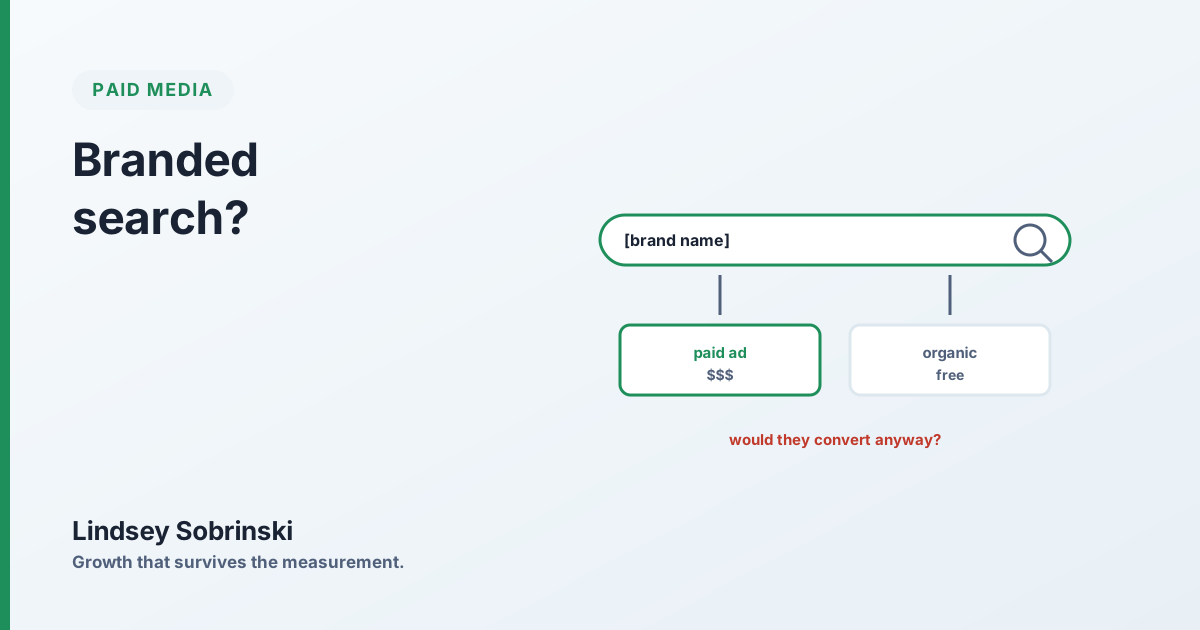
Branded search is the most comfortable line in the account. Someone types your brand name, your ad appears, they click, they buy. The ROAS is enormous. Nobody questions it, and that’s precisely the problem, it’s the spend most likely to be paying for clicks you’d get for free, and almost no one runs the test that would prove it either way.
This is the seam where the two halves of paid media meet. It’s an intent question, a branded searcher is the highest-intent, lowest-distance-from-purchase person in your funnel, and it’s a measurement question, because whether the spend is incremental can only be settled with an experiment.
Why the ROAS is so high, and why that’s not the point
Branded search advertises to people who already know you and are looking for you by name. That’s as close to the purchase as intent gets. Those buyers convert at high rates with or without the ad, and the campaign is credited for all of them, including everyone who would have clicked the organic result sitting right below the ad.
So the sky-high ROAS is real revenue and a misleading signal. It’s measuring the intent of the audience, not the contribution of the spend. The question that actually matters isn’t “what did branded search convert?” It’s “how many of those conversions would we have gotten anyway, through organic, if the ad hadn’t been there?”
The demand was created somewhere else
Here’s the uncomfortable part. A person searching your brand by name didn’t arrive at that intent by accident. Something created it, upper-funnel media, your organic presence, a past purchase, a recommendation. The demand was generated upstream. Branded search just stands at the finish line and captures it.
That makes branded search the cleanest example in all of paid media of a capture channel taking credit for demand generation created. The branded ad reports the revenue; the channels that actually built the brand recognition get none of it. Read branded search in isolation and you’ll systematically over-value capture and under-value everything that feeds it.
A branded searcher is demand something else already created. The branded ad captures it and reports it as if it caused it. That’s the whole demand-gen vs demand-capture problem in a single campaign.
Run the holdout
There’s exactly one way to know how incremental your branded search really is, and it’s the test most teams avoid because they’re afraid of the answer: a holdout.
Pause branded search entirely in a set of matched geographic markets while keeping it live everywhere else, or pause it for defined time windows, and watch what happens to total branded conversions, paid and organic combined. If organic absorbs most of the traffic when the ads go dark, the ad spend wasn’t buying much you didn’t already own. If total branded conversions drop meaningfully, some of it is genuinely incremental, and now you know how much. The gap between the reported ROAS and the holdout result is the money you’ve been spending to buy clicks that were already yours.
What to do with the answer
The point isn’t to stop bidding on your brand. There are real, specific reasons to keep branded coverage: competitors bidding on your name, controlling the landing experience and message, or a weak organic listing that doesn’t dominate the page. Those are defensible. “The ROAS looks amazing” is not, because now you know the ROAS was mostly a reflection of intent you didn’t create.
Run the holdout. Fund branded search where it’s genuinely defending the SERP or capturing demand organic would lose, and reclaim the rest for the prospecting and demand generation that actually fills the top of the funnel. The scariest test in the account is scary precisely because it so often works, and finding out is worth more than the comfort of never asking.