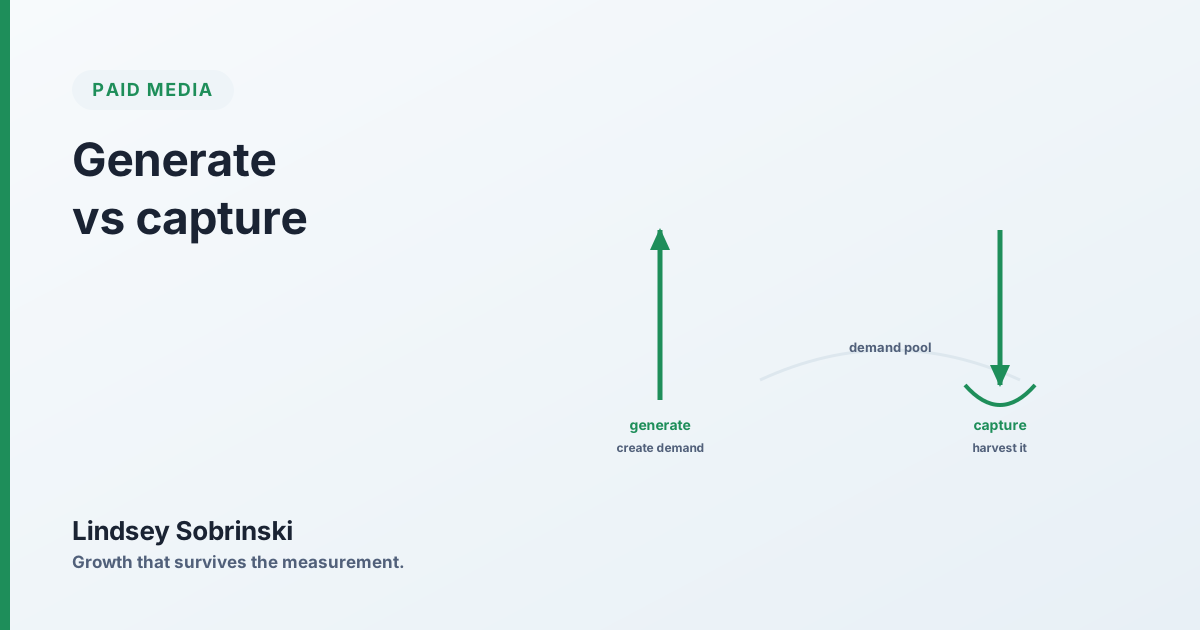
There are only two things paid media can do with demand. It can harvest intent that already exists, or it can create intent that doesn’t. Demand capture and demand generation. Almost every problem in a struggling media plan traces back to confusing the two, usually by over-funding capture because it’s the one that’s easy to measure.
The clean definition
Demand capture intercepts people who are already looking. Non-brand search, Shopping, retargeting, branded search, these channels meet active intent that’s already in motion. They’re efficient, they convert well, and they report beautiful numbers, because the buyer was already on their way.
Demand generation creates intent in people who weren’t in-market yet. CTV, online video, audio, paid social prospecting, out-of-home, these introduce a need, a category, or a brand to someone who wasn’t searching for any of it. They’re harder to measure and slower to pay back, because they’re planting rather than harvesting.
Both matter. The relationship between them is the whole game: you can only capture as much demand as something upstream created. Capture without generation is a harvest with no planting season.
Why the plan drifts toward capture
The pull toward capture is relentless, and it’s built out of measurement. Capture channels observe their conversions, so they report strong ROAS. Generation channels can’t observe much of their impact, so they report weakly. Put them on the same last-click scoreboard and generation loses every quarter.
So budget migrates downward. Each efficiency review moves a little more from the top to the bottom, because the bottom always looks cheaper on the report. The dashboard gets greener. Meanwhile branded search and direct demand slowly flatten, because the pool that capture is harvesting is no longer being refilled. By the time it shows up in the topline, the plan has been a pure harvesting operation for a year.
Capture channels are very good at taking credit for demand they didn’t create. Branded search converts a buyer who was already sold, by something upstream that got none of the credit.
The measurement trap underneath it
The reason this is hard to fix isn’t ignorance, most teams know generation matters. It’s that generation can’t win on the report that governs the budget. A last-click view will always rank the capture channels first, so the moment there’s pressure to cut, generation is the obvious target.
Breaking the cycle requires a different scoreboard. Geographic holdouts, matched-market tests, and media mix modeling read incremental demand, what the spend actually caused, instead of observed clicks. Run a holdout on your capture channels and you’ll often find a large share of that revenue would have arrived anyway; run one on generation and you can finally see the demand it’s creating downstream. This is why the demand-gen vs demand-capture question is ultimately a measurement question, not a media one. The argument can’t be won in a dashboard. It has to be settled with an experiment.
What to actually do
Start by mapping your spend to the two jobs. What share is harvesting existing demand, and what share is creating new demand? For most plans under pressure, it’s lopsided toward capture and getting worse.
Then protect a real generation budget, not a token line item, but enough to move demand, and stand up the measurement that can defend it. Choose the generation channel that reaches your most under-served intent level, run it against a holdout, and read the incremental lift rather than the last click. The goal isn’t balance for its own sake. It’s making sure the pool your capture channels harvest from is being refilled faster than it’s being drained.
Capture will always look like the efficient choice on the report. That’s exactly why the report can’t be the only thing you look at. Grow the demand, then harvest it, in that order, because the other order runs out.