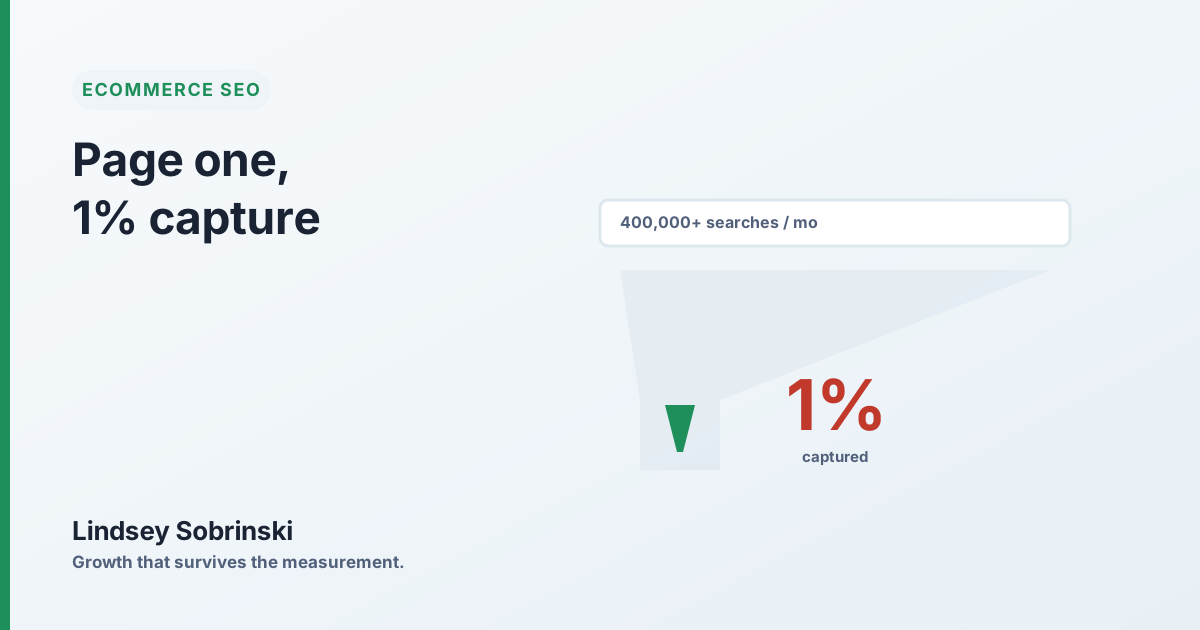
Here is the number that reframes how you should think about ecommerce SEO. On one category with more than 400,000 monthly searches, the site was drawing roughly 1% of the available clicks. It ranked. It was on page one. And it captured almost nothing, while a smaller, faster competitor sat at the top and took most of the rest.
That gap, between where you rank and how much of the demand actually reaches you, is the real game, and a rank tracker will hide it from you all day. It’ll show you “page one” in green while 99% of the market flows somewhere else.
Ranking is eligibility. Capturing is the outcome.
A ranking position makes you eligible for clicks. It does not deliver them. Between the position and the visit sits a whole set of filters: who holds the top spot, how many AI overviews and shopping units push you down the page, whether your title matches what the searcher actually wants, and whether your page is even the kind of page the query is asking for.
Any one of those can quietly strip most of the traffic off a page that “ranks.” Stack a few of them and you get the 1% result, a page that looks like a win in the rank report and does nothing for the business.
Capture rate is the honest scoreboard
The metric that surfaces this is capture rate: your clicks for a query cluster divided by the total search demand for that cluster. Measure it at the cluster level, the whole pool of related queries a category page should serve, not a single keyword, or you’ll flatter yourself with a term that carries no volume.
Then put it next to the top competitor’s estimated traffic for the same cluster. On that 400,000-search category, the comparison was brutal: single-digit thousands of clicks for the site, tens of thousands for the competitor. Same page-one neighborhood. Completely different businesses coming out the other side.
A number-three ranking that captures 40% of its demand beats a number-one that captures 5%. Position is the input. Captured, converting traffic is the output, and on ecommerce they come apart far more often than anyone likes to admit.
Why the gap opens
When a page ranks but doesn’t capture, it’s usually one of a few things, and they compound.
Someone else owns the top. Click-through drops off a cliff below the first result. If a competitor holds position one for the head term, everyone below shares the scraps, and “page one, position six” can mean almost nothing.
The page type is wrong for the query. A query with research intent that lands on a bare product grid gives the searcher nothing to engage with, and gives Google no reason to prefer you. The competitor winning these categories is often winning because their page type fits the intent, not because their products are better.
The result isn’t earning the click. A weak title, a missing or generic meta description, no rich result, no presence in the AI overview, each one shaves clicks off a ranking you already hold.
None of these show up in a position number. All of them show up in capture rate.
Where this changes what you do
Once you measure capture instead of position, the work reprioritizes itself. Instead of chasing a rank you may already have, you go after the gap between the ranking and the click: fix the title and snippet to match intent, change the page type where a research query deserves editorial content instead of a grid, earn the featured snippet or the AI citation, and add the structured data that makes your result richer than the one above it.
I work these pages the way I work paid media, judged on what they actually contribute, not a vanity number. Capture rate against the addressable demand is the read. And the encouraging part is that a page which already ranks is usually eligible for far more traffic than it takes, which means the gap is closable without starting from zero.
Pull your biggest category’s clicks, divide by its cluster’s search volume, and look at the number honestly. If it’s low, you don’t have a ranking problem. You have a capture problem, and that’s the one worth fixing, because the demand is already there, waiting on a page that isn’t converting it.