Ask ChatGPT whether a dress will work for a formal wedding, or what size to order when you’re between two, and watch where the answer comes from. It’s assembled from pages that stated the answer plainly, a clean, quotable sentence a machine could lift. It is almost never assembled from a product page that opens with “Our designers craft each gown with meticulous attention to detail.”
That’s the gap. AI answers and featured snippets are built from content that asks and answers real buyer questions. Most product and category pages lead with a brand preamble and bury the answer, or never state it at all, so they get skipped, and a competitor who wrote the answer gets cited instead.
The buyer’s questions are the content
Every product has a short list of questions a buyer needs answered before they’ll commit. Will this fit me? What size should I order if I’m between two? Is this appropriate for the occasion I’m buying for? What goes with it? How do I care for it? Category pages have their own set: how do I choose within this category, what suits which occasion, what’s the difference between these styles.
Those questions are the content an answer engine wants. Not because it’s a clever SEO tactic, but because they’re the actual things people ask, and AI answers, featured snippets, and voice results are all built by pulling the clearest response to a real question. If your page asks and answers them directly, it becomes liftable. If it leads with a styling narrative and leaves fit and occasion implied, it doesn’t.
Answer first, brand second
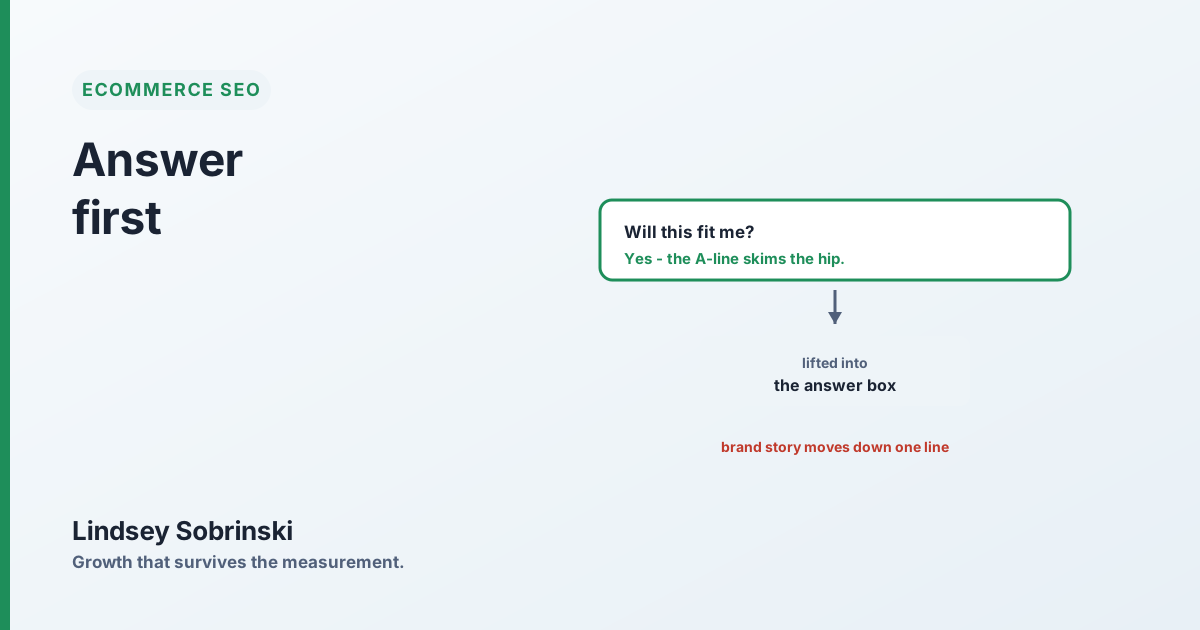
The structural fix is simple to state: put the answer before the preamble. Under a real question, phrased the way a buyer would ask it, give a direct, clean answer in the first sentence. Then add the brand voice, the styling detail, the story, underneath for the shopper who keeps reading.
An engine pulls that top sentence. A human rewards the rest. You lose nothing by leading with the answer; you gain the placement you were forfeiting by hiding it. “Will this fit a pear shape? Yes, the A-line cut skims the hip and defines the waist, which is what makes it flattering on a pear shape” is quotable. A paragraph about craftsmanship that never says the word “fit” is not.
An engine assembling an answer needs a sentence it can quote. If your page never states the answer plainly, the engine finds one that does, usually a competitor’s, or a third-party review. Leading with the answer is how you become the source instead of the runner-up.
Structure the engine can grab
Answer-first writing pairs with structure an engine can extract. Real buyer questions as headings. A direct answer in the first line under each. Sizing and comparison information in a table rather than buried in prose, because a well-formed table is the single most liftable object on a page. And FAQ or HowTo schema on top, machine-readable confirmation of the questions and answers already visible on the page.
The schema matters as evidence, not as a lever. It removes doubt about what your content means, which is most of the battle. But it has to match what’s actually on the page; marking up answers a shopper can’t see is a violation, not a shortcut.
Where this fits
This is the point where content SEO and ecommerce SEO meet. The entity and topical-authority work makes your site something an engine can model; answer-first structure on the commercial pages makes the specific answers liftable. Together they’re how a product or category page earns not just a ranking but a citation, the placement in the answer that a growing share of buyers now see before they ever reach a results page.
Take your highest-intent product and category templates and rewrite the copy to lead with the answers, not the preamble. Ask the real questions as headings, answer them in the first sentence, put the comparisons in tables, and confirm it with schema. The brand story doesn’t disappear, it moves down one paragraph, to where it belongs, underneath the answer the engine actually needed.