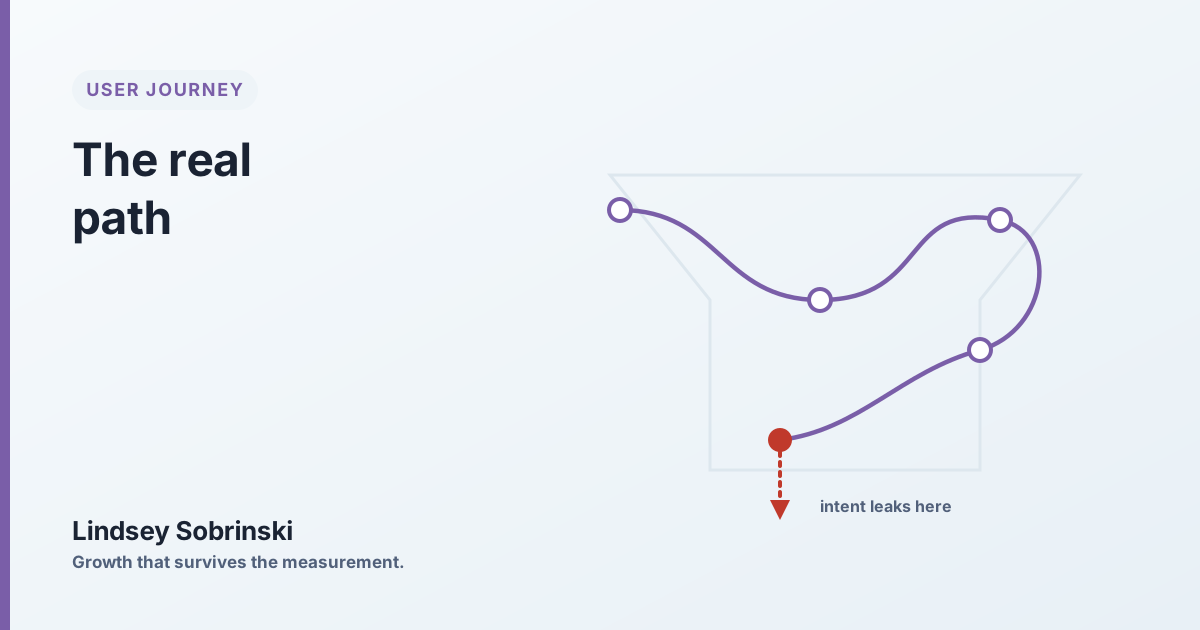
Look at the funnel diagram your team actually uses. Awareness, consideration, decision, four clean rectangles, one arrow each. That’s not a customer’s path. That’s your org chart with a coat of marketing paint, acquisition owns the top box, lifecycle owns the middle, sales owns the bottom, and the diagram exists so each team knows which box is theirs. It describes how you’re organized. It says nothing about how a person with real intent moves.
Because real intent doesn’t move in a line. People arrive mid-funnel, they already read three comparison posts before they hit your site. They bounce between research and pricing four times in one session. They leave, think about it for two days, and come back on a different device where your analytics greets them as a brand-new stranger. The path loops, stalls, and forks. Your rectangles pretend it doesn’t. So when conversion sags, you go looking for the problem in a map that was never drawing the territory.
Sessions dropping is not the same as intent dying
Stop counting where sessions drop. Start finding where intent dies. These are not the same thing, and confusing them is the most expensive mistake in journey work.
A drop in raw sessions between two steps is often nothing. It’s low-intent traffic leaving, the person who clicked a curiosity headline, realized you sell enterprise software, and left. Good. You don’t want them clogging the pipe. If you “fix” that drop, you’re optimizing to retain people who were never going to buy.
The dangerous leaks are quieter and hide inside healthy-looking numbers. High-intent users abandoning: a cart with items in it, sitting there. Someone who viewed pricing, twice, then vanished. A repeat visitor on their fourth session who still hasn’t converted. Those are people who told you, through behavior, that they wanted the thing, and then something in the path killed the intent. That’s where the money is, and it rarely shows up as the biggest percentage drop on the chart. It shows up as a small drop among your best-qualified segment.
Instrument by intent, not by page
Instrument the journey by intent, not by page. The move is to stop looking at stage totals and start looking at transitions between stages, split by intent signal.
First, define intent from behavior you can see: pricing-page views, add-to-cart, repeat visits, time spent on comparison content, branded-search entry. Score it. Now split every funnel step into high-intent and everything-else. A conversion rate that looked flat at 2% often breaks into 9% for qualified users and near-zero for the rest, and now you know the aggregate number was lying to you the whole time.
Then watch the transitions. Not “how many reached pricing” but “of the people who reached pricing with intent, where did they go next, and how many never came back.” Funnel exploration tools show you the branch. Session replay shows you the why, the form field that rejects a valid phone number, the shipping cost that appears only at step three, the mobile CTA sitting below a sticky footer no thumb can reach. You are looking for the specific step where a person who clearly wanted to continue could not, or chose not to.
Beware the step that is not the constraint
Beware the step that isn’t the constraint. Teams love optimizing the checkout button because it’s measurable and safe. But if 80% of your qualified drop-off happens two stages earlier, at a comparison step where you never answer the one objection that matters, then a better button changes nothing. You’ll run the test, see noise, call it inconclusive, and move on, never realizing you optimized a step that wasn’t binding. Find the constraint first. There’s usually one stage doing most of the damage. Fix that, and only that, then re-measure, because the constraint moves once you relieve it.
The leak may not be in the funnel at all
And check whether the leak is even in the funnel at all. This is the one most teams miss. A leak inside the funnel is often caused upstream, outside it. A channel dumping unqualified traffic, a broad prospecting campaign, a cheap-CPC source, an affiliate optimizing for clicks not fit, will produce a funnel that “leaks” at exactly the point where those users realize this isn’t for them. The page looks broken. The page is fine. The traffic was wrong. You cannot fix a targeting problem with a landing-page test, and you’ll burn a quarter trying if you don’t segment leaks by source.
What to do first
Pick your single highest-value conversion. Then do this, in order:
- Define one intent signal you trust, pricing view, add-to-cart, second visit. One is enough to start.
- Split your funnel by it. Look at the qualified segment’s conversion path only, and ignore the aggregate.
- Find the transition, not the stage, where qualified users leak most. That’s your candidate constraint.
- Watch ten session replays of qualified users who abandoned at that transition. You’ll see the actual step that breaks within the first five.
- Segment that leak by source. If one channel accounts for most of it, your fix is upstream, not on the page.
Do that and you’ll stop redesigning the funnel you drew and start fixing the path your buyers actually walk. The clean diagram was always for you. The messy loop was always the customer. Draw the loop.