Pull up any paid social account and rank the campaigns by ROAS. Retargeting is at the top, almost every time, usually by a wide margin. It’s the easiest budget to defend and the first place anyone points when they want to show the account is working.
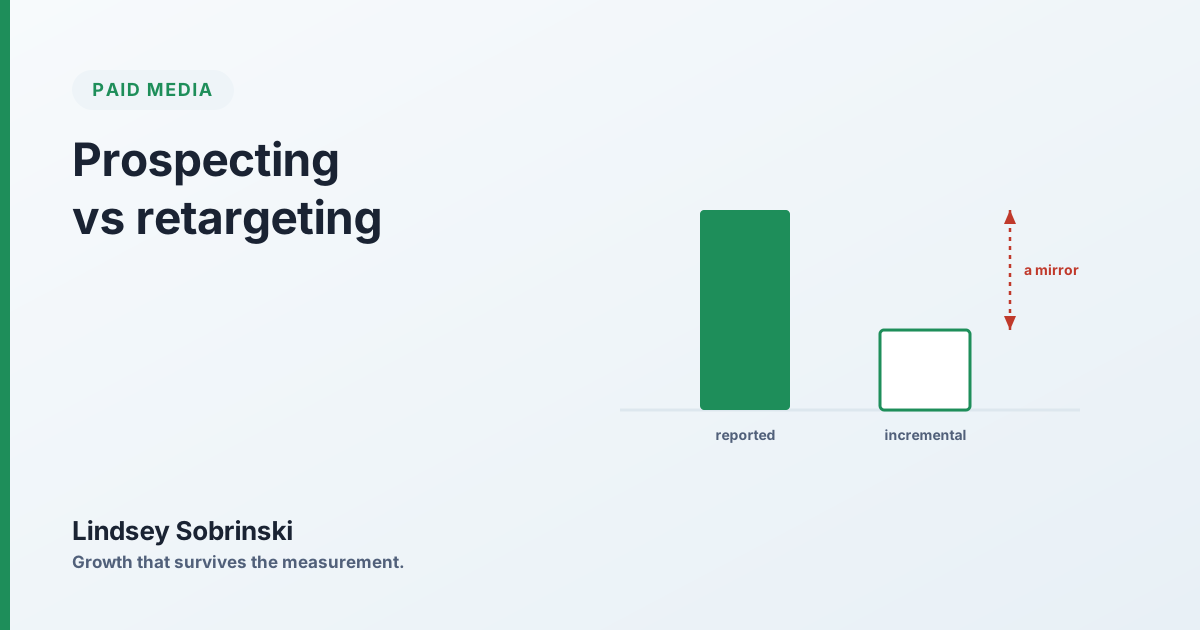
It’s also, to a large degree, a mirror. Retargeting reports a spectacular ROAS because it shows ads to people who were already going to buy, and then takes credit when they do.
Two different jobs
Prospecting targets people who haven’t engaged with you. It’s the work of finding and creating new demand, reaching someone who wasn’t looking and giving them a reason to start. It’s demand generation, and it’s hard: lower conversion rates, longer payback, weaker reported numbers.
Retargeting shows ads to people who already visited, browsed, or abandoned a cart. It’s re-engaging demand that already exists. It’s demand capture, and it’s easy: high intent, high conversion, gorgeous reported ROAS.
The two look like variations on “running ads.” They’re opposite jobs, and confusing them is how budgets get allocated exactly backwards.
Why retargeting ROAS is inflated
The mechanism is simple. A person who added to cart yesterday is already high-intent. A meaningful share of them would come back and buy with no ad at all. Show them a retargeting ad and the campaign gets credited for every one of those conversions, including all the ones that were going to happen anyway.
So the ROAS number is real in the sense that the revenue exists, and misleading in the sense that retargeting didn’t cause most of it. It intercepted demand that was already in motion and reported it as if it created it. The higher the intent of the audience, the more inflated the credit.
Retargeting advertises to people who already want the thing. A big share of its reported revenue is a reflection of demand that already existed, not demand it produced.
The trap this sets
Here’s the damage. That inflated retargeting ROAS doesn’t just sit there looking good, it actively pulls budget. Efficiency reviews see retargeting outperforming prospecting three or four to one and shift money accordingly. Prospecting, which does the genuinely hard job of filling the funnel, gets starved because it can’t compete on a number that was rigged by intent from the start.
And retargeting can only work if prospecting keeps filling the pool it draws from. Over-fund retargeting and you’re pouring money into re-engaging an audience that’s shrinking, because you defunded the thing that creates it. The account looks efficient right up until the retargeting pool runs dry.
Measure it, then split it
The fix is a holdout. Withhold retargeting from a random slice of eligible users and compare their conversion rate to the users who saw the ads. The difference is the incremental lift, the conversions retargeting actually caused. It’s almost always far below the reported ROAS, and that gap is exactly how much budget you’ve been over-allocating on the strength of a reflection.
Fund retargeting to its measured incremental contribution, not its reported number. Put the rest into prospecting, because prospecting is what creates the audience retargeting later harvests. This is the prospecting-and-retargeting version of the demand-generation vs demand-capture problem, and it gets settled the same way, with a measurement design that reads what the spend caused, not what it observed.
Retargeting isn’t a waste. It has a real job: reducing friction and recovering genuinely abandoned intent. But it is the single most over-credited line in most accounts, and its report is the least trustworthy thing on the dashboard. Measure the lift, fund it to the truth, and give the rest to the prospecting that keeps the whole thing fed.