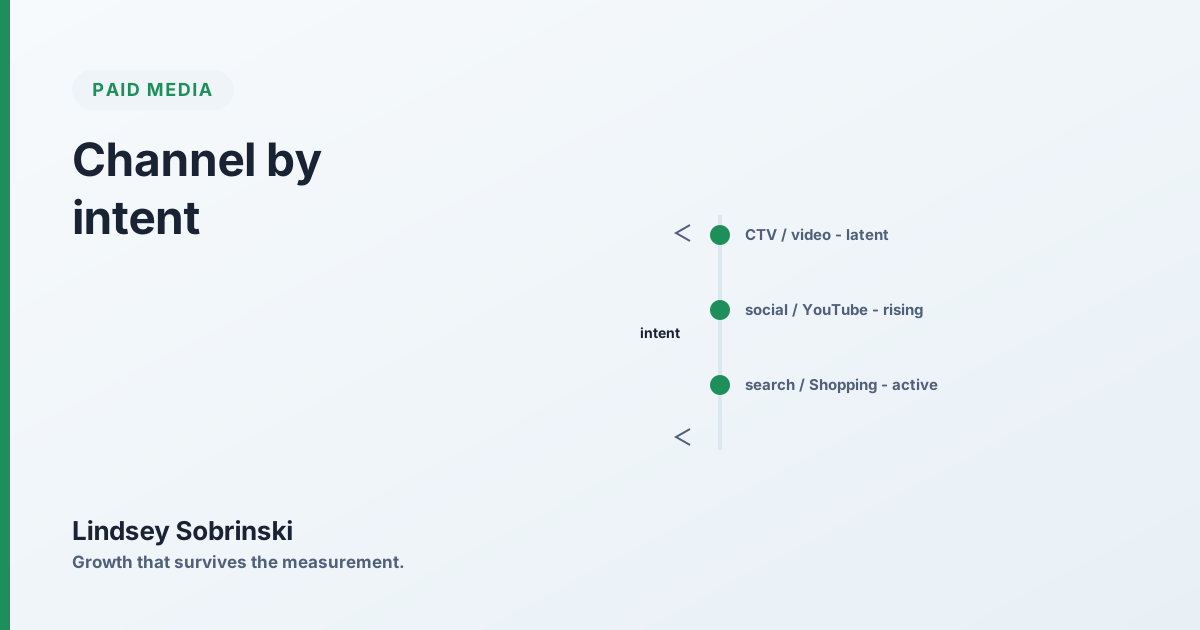
The fastest way to spot a weak media plan is to notice it was built from the channels up. “We need to be on TikTok.” “Should we try CTV?” “Everyone’s doing retargeting.” Each of those starts from the instrument instead of the buyer, and it’s backwards. A channel isn’t a strategy. It’s a tool for reaching a person at a particular distance from the purchase, and the only way to choose well is to know what each tool is actually good and bad at, and which level of intent it serves.
Here’s the map I actually use, channel by channel, and how to sequence them so a buyer you created at the top doesn’t fall out of the plan before they convert.
Latent intent: creating demand in people who aren’t looking
These are buyers with a need they haven’t acted on, sometimes a need they haven’t articulated. They’re not searching, so search can’t reach them. You have to go create the demand.
CTV and online video. The workhorses of demand generation. Premium, largely un-skippable video that can move a broad audience and introduce a brand or category at scale. Good at: reach, storytelling, creating demand before anyone’s in-market. Bad at: there’s no click to optimize toward, it’s easy to burn frequency on a narrow audience, and it is invisible to last-click measurement. That last weakness is why it gets underfunded, not because it doesn’t work, but because the default scoreboard can’t see it.
Audio and out-of-home. Similar job, different context. Ambient, hard to click, excellent for presence and memory, impossible to judge on a dashboard. Worth it when you have enough scale to make an impression stick, and when you have geo-based measurement to read the lift.
Paid social prospecting. The clickable end of demand generation, reaching cold audiences with targeting and creative. Good at: finding new people and getting some of them to engage now. The trap is judging it like retargeting; prospecting’s job is to fill the pool, and its numbers will always look worse than the channels harvesting that pool downstream. That’s the prospecting-vs-retargeting problem, and it’s the most common place budget gets misallocated.
Awareness now does double duty
There’s a second reason the awareness tier matters more than it used to, and it has nothing to do with capture. Upper-funnel awareness is also what generates the brand mentions, branded searches, and entity signals that AEO and Google’s AI surfaces reward. When an answer engine decides which brands to name, it leans on how often and how credibly you’re mentioned across the web, and awareness advertising is part of what drives those mentions and the branded search demand that corroborates them. Awareness used to just fill the funnel for paid to capture. Now it also feeds the organic-side signals that get you cited in the answer.
That’s why the buyer needs reinforcement from both to function. Someone who sees your brand on CTV and then sees it named in a Google AI Overview trusts it in a way neither touch achieves alone, the paid impression makes the brand familiar, the organic citation makes it credible, and the two together are what actually move a person to act. Run awareness without the organic presence and the demand you create gets captured by whoever the engine names instead of you. Build the organic authority with no awareness and you’re a credible brand nobody’s heard of. Paid awareness and AEO presence only work as a pair; each one makes the other believable.
Rising intent: staying present while they decide
Now the buyer knows they have a need and is actively comparing. They haven’t chosen. This is the consideration middle, the level most plans abandon, because it’s neither cheap reach nor cheap conversion.
Mid-funnel paid social and YouTube. Show up while they’re weighing options, with content that helps them decide rather than just asking for the sale. Good at: keeping you in the set, moving people from “aware” to “preferring.” Requires creative built for comparison, not just a discount.
Demand-gen campaign types. The platforms’ mid-funnel formats are built for exactly this level, broader than search, more intent-aware than pure prospecting. Useful for catching rising intent that hasn’t yet become a query.
The middle is where the full-funnel argument lives or dies. Serve it and the demand you created at the top keeps moving toward you. Skip it and buyers you paid to create get handed to whoever shows up during consideration, often a competitor.
Active intent: being there when they’re ready
The buyer has a clear, immediate need. The job now is presence and low friction, not persuasion.
Non-brand search and Shopping. The classic demand-capture engine, meeting a specific query with a specific answer. Good at: converting existing intent efficiently. The catch, increasingly, is that AI search is eroding this inventory; the cheap, abundant clicks here are getting scarcer and more contested, which is exactly why the upstream levels matter more than they used to.
Branded search. The highest-intent, lowest-distance placement in the plan, and the most over-credited. A branded searcher already knows you; the demand was created upstream. Worth funding where it defends the results page or captures intent organic would lose, but run the holdout before you believe its reported return.
Retargeting. Earns its keep when it recovers genuinely abandoned intent, the interrupted checkout, the comparison that stalled. Becomes waste when it just re-shows ads to people who were coming back anyway and books the credit. The line between the two is only visible in a holdout. Fund it to its incremental lift, not its flattering reported number.
Every channel reports best on the demand it intercepts and worst on the demand it creates. That’s why judging channels one dashboard at a time systematically overfunds the bottom and starves the top.
How to sequence them
Sequencing isn’t a rigid funnel with hard gates. It’s making sure every level of intent has a channel serving it, so the buyer moves through the plan instead of falling out of it. Create demand with upper-funnel video and social among people who aren’t looking. Stay present with mid-funnel social and video while they compare. Be there, cleanly, without overpaying, with search, Shopping, and disciplined retargeting when they’re ready to act.
The failure mode is a plan that’s strong at two ends and hollow in the middle: heavy prospecting, heavy capture, nothing holding the buyer through consideration. You pay to create demand and pay again to capture it, and lose the people in between to whoever bothered to show up while they were deciding.
The discipline underneath all of it
Notice what this map is not: a recommendation to be everywhere. Concentrating everything on one bottom-funnel channel caps you at the demand that already exists. Spreading thinly across every channel wastes money on reach you can’t convert. The disciplined move is to fund the levels of intent that are under-served relative to the demand moving through them, which is usually fewer channels than a media rep wants to sell you, and more upper-funnel presence than a last-click report will ever justify.
Start from the buyer, not the channel. Find the level of intent that’s starved. Then, and only then, pick the instrument that reaches it.